• This forum is the machine-generated translation of www.cad3d.it/forum1 - the Italian design community. Several terms are not translated correctly.

tubular drilling

  • Thread starter Thread starter Pastor180
  • Start date Start date

Pastor180

Guest
Good morning to all,

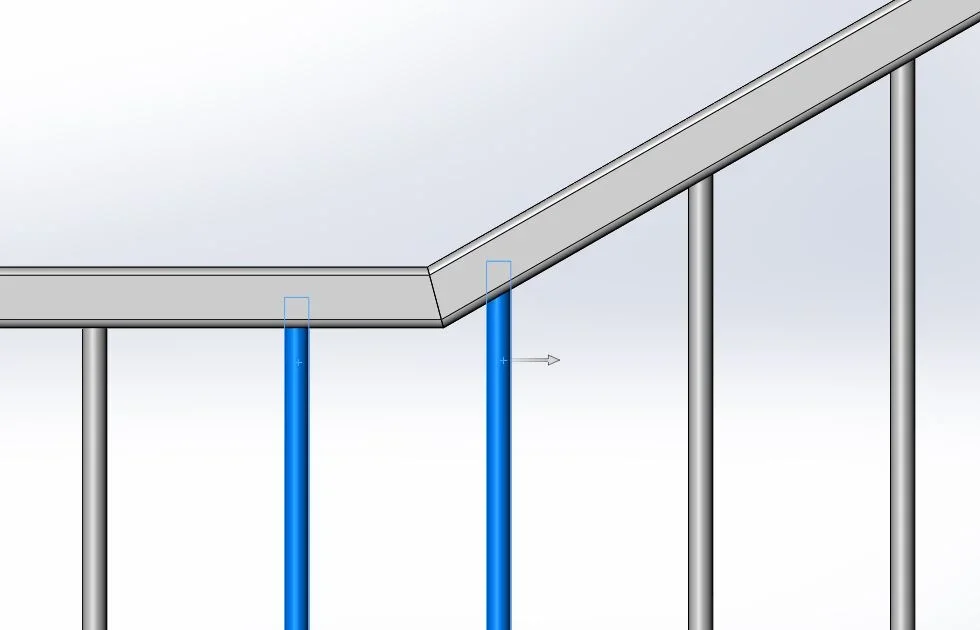
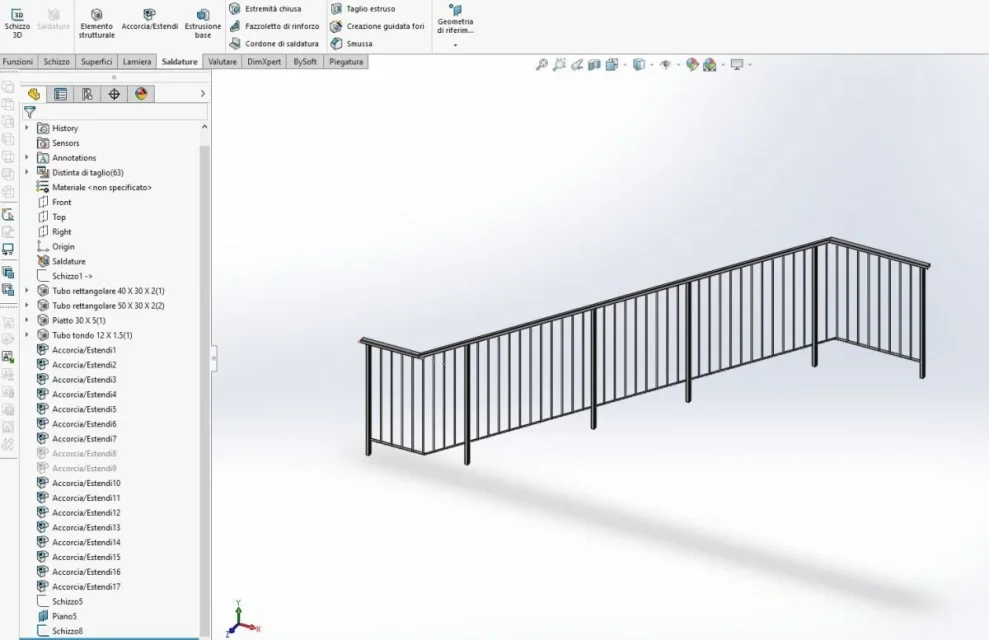
I am trying to make in solidworks a drilling on a tubular (corriman) at the intersection with other tubular (divisors). Since the cut on the handrail must be made with laser cutting, the drilling must be perpendicular to the thickness of the same. Is there a way to get this type of drilling?

thanks for any suggestions.

edit: I leave here under a small screen to understand the situation
 
However laser cutting also makes non-circular punctures....you could get the geometry of the dig through subtraction of solids.... I do not understand the problem.

1697452237100.webp
 
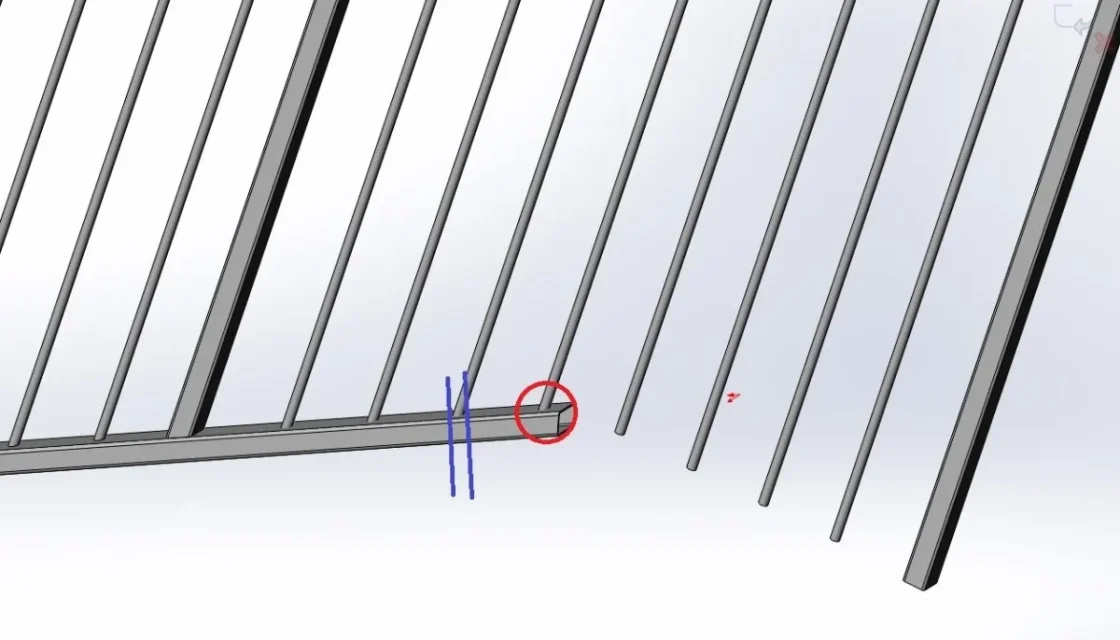
Surely the laser can make a not circular cut but I don't know how to make the normal hole at the handrail for the passage of the tube. in case of sx in the photo is not a problem, my difficulty lies in the case of dx. if on the lower face of the handrail I create a sketch and generate an intersection curve that then I use to make the drilling the result that I get is that in photo _2; the problem is the area highlighted in red that would be the thickness.
 

Attachments

  • Foratura_1.webp
    Foratura_1.webp
    14.6 KB · Views: 9
  • Foratura_2.webp
    Foratura_2.webp
    15.3 KB · Views: 14
apart from being talking about carpentry and holes should be rather laschi (for me it makes little sense also having to shove the railing in the tube to be sincere), the methods can be:
- use of matching and similar function
-cut function, using as plan the end of the tube, and subsequent repetition
- use of structural members (here I could say a shit because I do not remember how it behaves in a similar case)

even if the cut is not normal to the pipe would think of the laser cutting program to addulate it
 
on the matching function I attach you an example.
Anyway, I'd make some more lax holes like massive...
 

Attachments

Meanwhile thank you for the answers.. .
Surely the holes will have to have a game to allow to thread the pipes with ease but at the moment I just wanted to understand how to drill and then I would have added it.
As for threading pipes into the handrail we use it for a cost speech... the dividers should not be cut with the grades and in the assembly phase the intersection is controlled by the holes on the handrail.. at least we do so especially for stainless steel jobs.
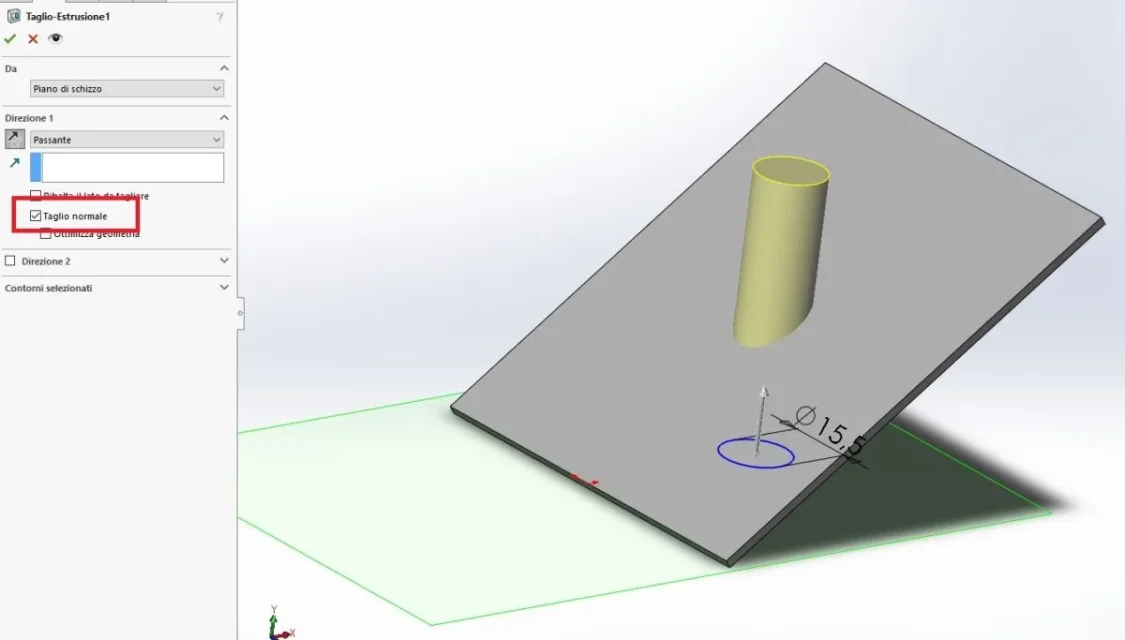
Attached I put an example of drilling that I would like to get made on a sheet.. here the result is what I want to get. the hole is generated as "normal cut".
cmq I try to make holes as you have suggested before and I will compare with who cuts the pipes to understand if the normalization of the holes can make them with the cutting program.
 

Attachments

  • Lamiera.zip
    Lamiera.zip
    63.3 KB · Views: 2
  • Lamiera_1.webp
    Lamiera_1.webp
    24.9 KB · Views: 17
to want you can create the tube as sheet, that is to create a square profile with a small opening, then you make the holes with normal cut and in the end you close the profile with an extrusion (eventual errors of the development function will be irrelevant and negligible)
you don't even know if you're working in the environment part or together
 
I am working in the environment part to exploit the functions of the structural elements
 

Attachments

  • Ambiente Parte.webp
    Ambiente Parte.webp
    50.7 KB · Views: 18
to make lask holes, it is always preferable to avoid, at least for three reasons.
1) need more welding material.
2) the welding cord is wider, with more molar material possible.
3) increases the internal longitudinal withdrawal/lower of the railing handrail, so if you do not make alternating partial welding, the railing is deformed.
modern laser cutting, can then orientate the head in all directions, so it is really worth making even tilted cuts, even on thin sheets.
 
to make lask holes, it is always preferable to avoid, at least for three reasons.
1) need more welding material.
2) the welding cord is wider, with more molar material possible.
3) increases the internal longitudinal withdrawal/lower of the railing handrail, so if you do not make alternating partial welding, the railing is deformed.
modern laser cutting, can then orientate the head in all directions, so it is really worth making even tilted cuts, even on thin sheets.
I usually add 3-4 tenths of play for holes and then we go to weld with tig dashes and we do not risk deforming the structure. As for the laser there are 5 axis lasers but unfortunately at the moment that we cut the tubular has a 3-axis laser that does not allow to make inclined cuts.
 
pro
I am working in the environment part to exploit the functions of the structural elements
I'll throw it there, but I don't have a chance to try and I'll go a little bit by heart:
- make a sheet equal to the thickness of the tube and to the lower face of the tube for all its length
- make holes on the sheet (only on this) with normal cut
- use the matching command to eliminate the material matching with the holes.
 
for tubulars there is no function comparable to the normal cutting of sheets. This is a problem that I face very often and in very different ways depending on the project. As a rule, I use the surfaces, keep in mind that the thickening function is always "normal" to the profile surface.
in these cases I never use welded, also because the step of the single laser tube must have a code and with welded, this phase, stretches a lot.
 
thanks to all for the various suggestions. at the end I will follow two roads:
1- run unnormalized holes on the tubular and then I will compare with who laser cut to make normalized holes (faster and simpler solution)
2- I generate normalized holes on a provisional sheet which then I go to report on the tubular (tested and I get the desired result)

(y)(y)
 
- I generate normalized holes on a provisional sheet that then I go to report on the tubular (tested and I get the desired result)
If it's not like the method I've proposed you can put your method so that others in your situation can be inspired?
1- run unnormalized holes on the tubular and then I will compare with who laser cut to make normalized holes (faster and simpler solution)
let us know what the answer is
 

Forum statistics

Threads
44,997
Messages
339,767
Members
4
Latest member
ibt

Members online

No members online now.
Back
Top