
micknat
Guest
Hello everyone,
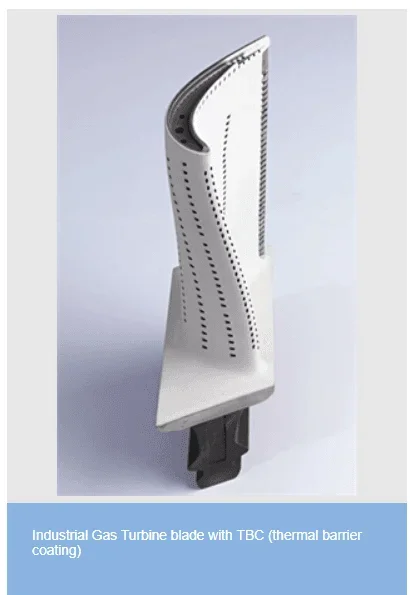
I'm reverse engineering a turbine blade. I have the complete external/internal stl available, thanks to coupled optical/tomographic scan. I have a problem with cooling holes. the shovel has an internal serpentine and this is communicated with the external surfaces of the shovel through a myriad of holes to allow the cooling.
 These are images downloaded from the web, but give an idea of my problem (in the sense that I have many more holes). the holes are presented according to "pattern" arranged almost as the isoparametrics of the external surfaces (and I emphasize almost), their axes have "costant" angles regarding the surfaces and some files have non-cylindrical forms. I look for suggestions for the parametric realization of these holes: Maybe by building the floor surfaces with comfortable patterns to generate and then transfer them to the real surfaces to execute the trim... I wouldn't want to build them one by one... Is there anyone who wants to give me advice?
I'm reverse engineering a turbine blade. I have the complete external/internal stl available, thanks to coupled optical/tomographic scan. I have a problem with cooling holes. the shovel has an internal serpentine and this is communicated with the external surfaces of the shovel through a myriad of holes to allow the cooling.
These are images downloaded from the web, but give an idea of my problem (in the sense that I have many more holes). the holes are presented according to "pattern" arranged almost as the isoparametrics of the external surfaces (and I emphasize almost), their axes have "costant" angles regarding the surfaces and some files have non-cylindrical forms. I look for suggestions for the parametric realization of these holes: Maybe by building the floor surfaces with comfortable patterns to generate and then transfer them to the real surfaces to execute the trim... I wouldn't want to build them one by one... Is there anyone who wants to give me advice?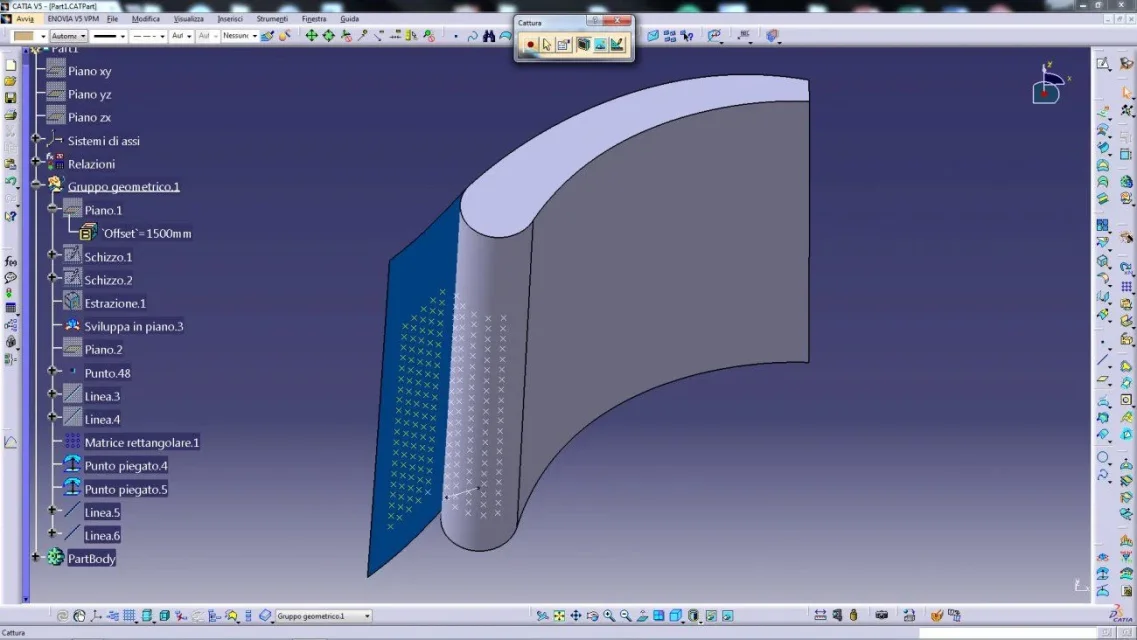
 .
.
