• This forum is the machine-generated translation of www.cad3d.it/forum1 - the Italian design community. Several terms are not translated correctly.

project ladice

  • Thread starter Thread starter Exatem
  • Start date Start date
What thicknesses and sizes are used?
for development which factor is used ?
As for the bandage, it starts from the thickness greater in correspondence of the keel, then as it rises, the thickness is reduced. you can start with 10, 12mm and get to 5. We'll see him later.
With regard to the real structure, the size of the central paramezzale and the others is determined by formulas dictated for example by the rhine. In the case of military ships, it is not observed what the agency says as, the parameters adopted, are more restrictive.
Anyway here:
in the attached pdf you will find the explanation of the minimum size of the central fender. I chose a certain material but nothing prohibits using others. in this case the necessary coefficients are in previous posts.
I started talking about it.
Let's go ahead and then I'll be more precise. Now I want to go see your file.
hasta the view!
 
This is a piece of the hull made according to the system I told you.
is slightly shaken by the lines but, the quality is very different.
Try to overlap the curves and let me know what you think.
hasta the view
even if incomplete (please always attach an image of the model in order to verify that the import went to good end as well as to allow to participate also to the "desperados") your model seems ok to me.

osd (that the surfaces treat them as an execution platoon) did not bend, while with that of exa it came out full of "frizzi e lazzi".

Hi.
 
osd (that the surfaces treat them as an execution platoon) did not bend, while with that of exa it came out full of "frizzi e lazzi".

Hi.
But what do you expect? These are all hyperparametized and I still go with the piombi and the flexible.
at least give me the honor of weapons.
 
This is a piece of the hull made according to the system I told you.
is slightly shaken by the lines but, the quality is very different.
Try to overlap the curves and let me know what you think.
hasta the view
This second is "perfect" for me:
in the modification you managed to respect perfectly lengths and heights of construction, so much so that joining it together with the original "study" I used without problems three opposite edges bound with the respective "nodes" of the skeleton:Superf prova  su Ord studio.webp .. I added just four nomenclatures that in the transpositions iges of the original files of exatem are lost.

I would certainly follow this path.

shocks are imperceptible and irrelevant.
only in the stern, in the knee zone you notice more; you softened the curve "returning" more. Therefore all the flank is narrower, decrease the volumes and change the line of float. I have no idea what order of magnitude (water moves several...), you must feel exatem if this is important.SCOSTAMENTO dal GINOCCHIO.webpfrom the first file (that "bruttino". In attempting to correct swx games and surfaces you lose whole bandage pieces on the street) I see that the bow/bulb still have problems.
exa, in my opinion that bulb should be more round also frontally (the tips and even on the prora straight I added them, it seemed strange that it should end so accurate). a kind of sticky ball (and picked up) "under".. Or should it be?
max it is possible to correct the curves in order to get that result "spherical"?
also the curves on the floors of the various bridges are not perfect (in particular the +800 on the deck that gives the start "from the bottom" to your surface) and this still causes a slight irregularity to the flank. can you also adjust those (clearly remaining on the same floor in height)? in case you do "your head" that the results are excellent.

I have repeated that I can not use the surfaces, I am trying right now:biggrin:. a minimum explanation on the procedure is always appreciated.
I was trying to "cover" all the semi-hull in a single blow, making it impossible when moving into critical areas.
max seems to me that you also proceed "to pieces-regions" to join later.. Am I wrong?
These are the swx tools that you also know:SUPERFICI.webpdo you have a similar command in proe, and what would you use and what arrangements? (I don't want to steal your trade, be clear:biggrin:).
I'd like to try it myself without going crazy and miss a night.

greetings and thanks for the good work and explanations
Marco:smile:
 
according to sam views your skills, you should get something good out of it. .
This is a piece of the hull made according to the system I told you.
is slightly shaken by the lines but, the quality is very different.
Try to overlap the curves and let me know what you think.
hasta the view
Now I'll look at what you've done. but I have no doubt that it will be a excellent work.:
In fact, cvd :biggrin:
You saw exa, what did I say?

greetings
Marco:smile:
 
this second as far as I am concerned is "perfect" in the modification you managed to comply perfectly with lengths and heights of construction, so that joining it together with the original "study" I used without problems three opposite corners bound with the respective "nodes" of the skeleton:
I added just four nomenclatures that in the iges transpositions of the original files of exatem are lost.

I would certainly follow this path.

shocks are imperceptible and irrelevant.
only in the stern, in the knee zone you notice more; you softened the curve "returning" more. Therefore all the flank is narrower, decrease the volumes and change the line of float. I have no idea what order of magnitude (water moves several...), you must feel exatem if this is important.
logically reducing volumes, reducing the thrust but at the moment I would leave this aspect. It seems more important to give priority to the quality of work. when it is finished I will feed to the soft that will return displacement, coefficients, etc. etc.
from the first file (that "bruttino". In attempting to correct swx games and surfaces you lose whole bandage pieces on the street) I see that the bow/bulb still have problems.
exa, in my opinion that bulb should be more round also frontally (the tips and even on the prora straight I added them, it seemed strange that it should end so accurate). a kind of sticky ball (and picked up) "under".. Or should it be?
max it is possible to correct the curves in order to get that result "spherical"?
also the curves on the floors of the various bridges are not perfect (in particular the +800 on the deck that gives the start "from the bottom" to your surface) and this still causes a slight irregularity to the flank. can you also adjust those (clearly remaining on the same floor in height)? in case you do "your head" that the results are excellent.

greetings and thanks for the good work and explanations
Marco:smile:
Yes, the bulb must not begin with a edge but I have not yet had time to finish the constructive drawings that make the idea more and as I said, my flexibles are obviously not flexible (as I begin to resent wear).
I associate myself with the compliments of sam, it really seems to me an excellent job.
 
OK.... proceed with the second system, trying to stay "closer" to the curves in the aft area.
When I get to the bow, I'll let you know.
to do a job done well I will need a few days of work.
 
What thicknesses and sizes are used?
for development which factor is used ?
First of all we must establish which rules to follow. I would follow the rules for the construction of steel hulls.
It seems to me to remember that some posts back we had already mentioned but anyway, to give a logical thread to the thing, we start from the beginning, logically I will not write entirely all the norms but only those of greater interest.
the rules that will follow, apply to welded vessels having length >90 meters.Chapter 1 materials.
1.1 types of steel
the structural elements must be made with steels belonging to two categories, Ordinaries e ad high resistance.
these categories are in turn divided into graddictated by their yielding load, and Type about their weldability and fragile break resistance.
the first are divided into two degrees 24 e27235 e265. seconds in three degrees 32,36,40whose yields are 315, 355 and 390 n/mm2.
1.2 coefficient k
the value of the coefficient k is function of yield according to the following table
grade 27 k =0,925 - 32 k =0.780 - 36 k =0.720 for lower steels k =1, for higher steels the value is determined by the general direction that assesses the conditions. Interpolation is used for intermediate values.
next time we see the classes of structural elements.
OK.... proceed with the second system, trying to stay "closer" to the curves in the aft area.
When I get to the bow, I'll let you know.
to do a job done well I will need a few days of work.
Take all the time you need. We wait confident.
Hi.
 
In fact I went looking and found that I had spoken here:http://www.cad3d.it/forum1/showthread.php?t=16721&page=31but still we repeat everything by giving more order to the thing.
Yes, I remembered.
It doesn't look like I'm "ligio", what do you think? :biggrin:

and I seem to remember that I had spoken of Calandrature for the "preformation" of the sheets (there is never any case/condition for which it is used in the past?). So how does k apply? normally to turn (not high thicknesses) an 0.5 is always adopted (the development of a cylinder is given by its average circumference); is in the bending that takes importance k, along with the fold r (the software serves these 2 parameters).

in which size are the sheets used?
would you have a "drain" of sheet formed like... to realize how it will be.


greetings
Marco:smile:
 
Yes, I remembered.
It doesn't look like I'm "ligio", what do you think? :biggrin:

and I seem to remember that I had spoken of Calandrature for the "preformation" of the sheets (there is never any case/condition for which it is used in the past?). So how does k apply? normally to turn (not high thicknesses) an 0.5 is always adopted (the development of a cylinder is given by its average circumference); is in the bending that takes importance k, along with the fold r (the software serves these 2 parameters).

in which size are the sheets used?
would you have a "drain" of sheet formed like... to realize how it will be.

greetings
Marco:smile:
I know you're accurate, I've noticed every time I send you a file:biggrin:
in the max answer that asked me the value of k to be adopted in the sizing, I mean what a factor of reduction, the safety coefficient to be inserted in the calculation formulas to bending, cutting, etc.
As for sheet size, well, it depends on where you are in the hull. if for example we are in correspondence of practically flat walls, large sheets are used (as in the case of bridges). logically where the curvatures are "important", as in the infamous bulb, the "picks" are reduced.
Now I don't have a bandage development table here, but I don't have a problem showing you one as soon as possible.
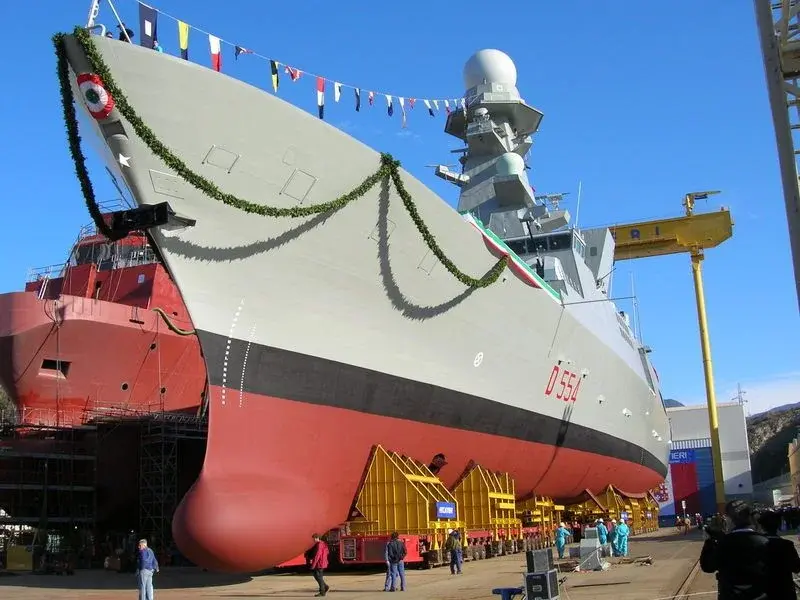
In the meantime, I'll show you some photos where you can see the joints of the stripes. the first two are of the same unit.
Hi.554.webpbulbo 1.webpbulbo 2.webp
 
I know you're accurate, I've noticed every time I send you a file.
..by the way, I noticed other "imprecisions" along the chiglia a +100; you left to 100 with a straight line from that stern to join directly to the first 0 (zero) bow. In this way you created a "diagonal" that does not intersect any of the edges to 100 of all the intermediate orders.
..but I'm not saying anything otherwise maxopus scotches us:biggrin: (however max if that line bothers you take a look and correct it as well).
in the max answer that asked me the value of k to be adopted in the sizing, I mean what a factor of reduction, the safety coefficient to be inserted in the calculation formulas to bending, cutting, etc.
In fact, I had doubt that you were referring to something else.
but then do you have any idea if the developments are calculated as for the "traditional" displacement?
that then our radius magnet will be an approximation in order to be able to cover forms that have nothing to do with a constant arc of circle.. Am I right?
Is it a "beat job"?

curious the bulb of the last image. .

ah, and let's not forget thrust, at the bow and stern, I want to reverse course in a handkerchief (head-tail:biggrin:).

greetings
Marco:smile:
 
..by the way, I noticed other "imprecisions" along the chiglia a +100; you left to 100 with a straight line from that stern to join directly to the first 0 (zero) bow. In this way you created a "diagonal" that does not intersect any of the edges to 100 of all the intermediate orders.
..but I no longer say anything else maxopus scotches us (however max if that line bothers you from a look and correct it as well).


In fact, I had doubt that you were referring to something else.
but then do you have any idea if the developments are calculated as for the "traditional" displacement?
that then our radius magnet will be an approximation in order to be able to cover forms that have nothing to do with a constant arc of circle.. Am I right?
Is it a "beat job"?

curious the bulb of the last image. .

ah, and let's not forget thrust, at the bow and stern, I want to reverse course in a handkerchief (head-tails).

greetings
Mar
that line to +100, somehow it has to "fum" towards the keel, okay any solution. but it doesn't seem to me that you order interested have the edge to +100, tomorrow I check.
See that you're accurate? :biggrin:
Of course we put trusts
will result in some sort of patchwork. .

greetings
Mar
I'll show you a table on Monday.
Bye.
 
..by the way, I noticed other "imprecisions" along the chiglia a +100; you left to 100 with a straight line from that stern to join directly to the first 0 (zero) bow. In this way you created a "diagonal" that does not intersect any of the edges to 100 of all the intermediate orders.
..but I'm not saying anything otherwise maxopus scotches us:biggrin: (however max if that line bothers you take a look and correct it as well).
Careful. the keel in the stern zone will be made with a plate, while at the bow (just before the bulb begins) the strip will come on the keel and will be welded to tray (fasciame a few centimeters, under it puts a ceramic tray and from above weld).
making "a soft and reassembled line" is almost impossible to make with the dish, it is advisable to make the whole dish, cut transversally where it has to end and on that the bow plates cut ad hoc.
In fact, I had doubt that you were referring to something else.
but then do you have any idea if the developments are calculated as for the "traditional" displacement?
that then our radius magnet will be an approximation in order to be able to cover forms that have nothing to do with a constant arc of circle.. Am I right?
Is it a "beat job"?
the technique I use usually is (well...the "usually" is an abuse of language, because the feet on the iron I put them quite rarely...usually work with fiberglass):

- for low curvature, I project a grid on the deformed surface and then development. the carpenter draws with chalk this grilled all deformed on the flat sheet, and begins (of brush or press, depending on the thickness) to "raddrizzare" the grilled. when this will be right, the sheet will have more or less the desired shape. done this rests on the structures, it is joined by pulling it from the inside (and deforming elastically to recover that little error due to the technique "eye") and it starts to weld

- for high curvature, I quote the grilled seen in the plant, giving the height of the various knots. the carpenter, for each sheet, prepares such grilled in iron fil, puts the sheet under the press (the high curvature typically has the greater thicknesses) and so removes it when it managed to make sure that the iron fil poggi in all points on the sheet. in the latter case it is indispensable that the carpenter is a god on the ground, because the sheet so formed, if it does not coincide with the structure, it must be reported in the workshop.
 
oh fulvio, well found:smile:

didn't you try again with the last file? If you read everything you decided to follow your way around and maxopus is working on it.

So the sheet metal construction still has a lot of craft, even for large dimensions? and is not even more rolling but precisely plastic deformation? if under press that form of "punzoni" is used (like a large ball hammer ?:biggrin:)?

ah, then you'll better explain that of vassoio di ceramica; but an eye that the wife gets nervous if I put my hand at the good service:biggrin:

greetings
Mar
 
oh fulvio, well found:smile:

didn't you try again with the last file? If you read everything you decided to follow your way around and maxopus is working on it.
I'll follow, see what's coming out. .
So the sheet metal construction still has a lot of craft, even for large dimensions? and is not even more rolling but precisely plastic deformation? if under press that form of "punzoni" is used (like a large ball hammer ?:biggrin:)?
for what I know, yes. a hydraulic cylinder with a ball at the tip. with balls of different sizes you get the desired shapes.
ah, then you'll better explain that of vassoio di ceramica; but an eye that the wife gets nervous if I put my hand at the good service:biggrin:
calm your wife... I meant this technique here:
 

Attachments

  • ceramic-backing-vert-horizo.webp
    ceramic-backing-vert-horizo.webp
    4.1 KB · Views: 8
Aaaah, get it.
Can I put it back in the cupboard?
He doesn't know. .

greetings
Marco:smile:
depends on how smart it is... but these are your business. At most, if he finds it "flammed" tell him that you forgot about the fire, and that if there were she would certainly not have happened. It usually works...:finger:
 

Forum statistics

Threads
44,997
Messages
339,767
Members
4
Latest member
ibt

Members online

No members online now.
Back
Top