• This forum is the machine-generated translation of www.cad3d.it/forum1 - the Italian design community. Several terms are not translated correctly.

tolerance of complanarity

  • Thread starter Thread starter d-prom
  • Start date Start date

d-prom

Guest
Good evening, everyone.
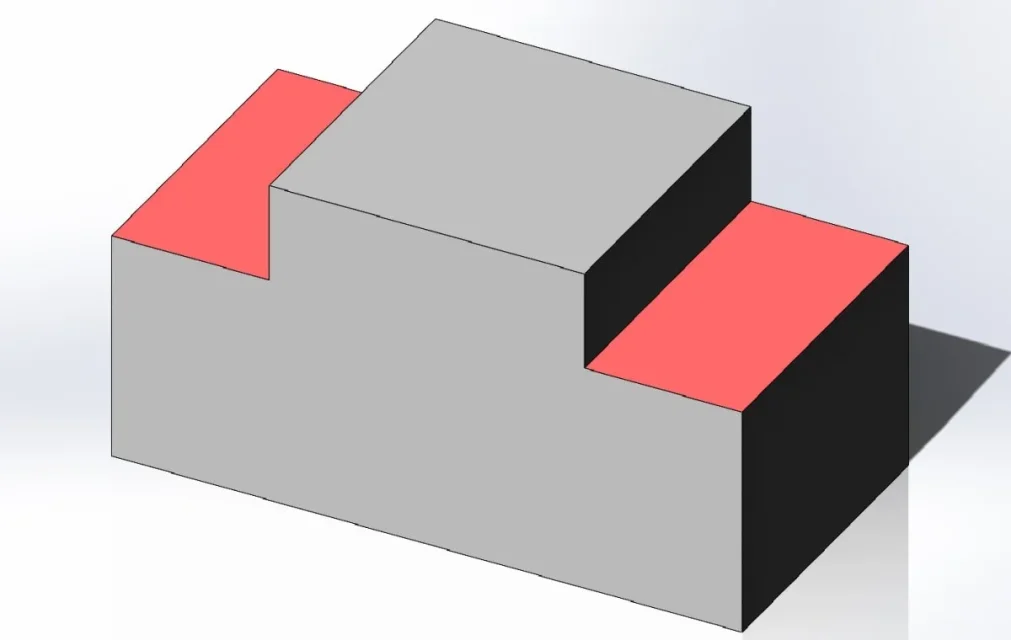
I would like to ask if someone can enlighten me on a matter of this kind: I have a piece like that in the figure below. in this particular the two faces you see colored red must be perfectly round (let's say within a couple of cents). These are faces that will be rectified, but for obvious reasons cannot be rectified together. to put tolerances of flatness on both surfaces is not enough, because tolerance says that they must be flat but not necessarycomplanaries. I could put narrow torches on the lower or upper surface, but that's exactly what I don't want to do because this distance is really unimportant and I'd win who does the piece to a precision that won't feel at all.
summing up: I care that the two faces are flat and flat, but the distance from the faces I care little. What form tolerances should I put on the design?
Thank you in advance.Complanarità.webp
 
Bye.
I probably didn't understand the problem well but can't you make a combination of these two shape tolerances between the two faces maybe with narrow dimensional tolerance?
Cattura.webp
Cattura2.webp
 
Bye.
I probably didn't understand the problem well but can't you make a combination of these two shape tolerances between the two faces maybe with narrow dimensional tolerance?
View attachment 68185
View attachment 68186
I'd say no. the tolerance of flatness says that the surface must be flat, when referring to two surfaces says that both must be flat. parallelism, of course, says it must be parallel to another. but my case is that I have two surfaces that in addition to being flat, they must also be common among themselves. If I place a flatness on both and parallelism over a third, nothing forbids me that between the two faces there is a staggering, for absurd even some tenth.
The only solution would be to give both surfaces a share of a third surface with a very tight tolerance, but I don't really need it, so that's what I want to avoid. . .
 
you can put a datum on one of the two and on the other put the flatness with tolerance compared to the datum
 
Of course there is only the sex of the angels that differentiates them.... that is the datum that one has and the other does not.
 
Of course there is only the sex of the angels that differentiates them.... that is the datum that one has and the other does not.
I hope you're joking. .
"complanation" means that they must be strictly on the same floor, "parallele" can also be spaced one kilometer, provided they are parallel. . .
 
I hope you're joking. .
"complanation" means that they must be strictly on the same floor, "parallele" can also be spaced one kilometer, provided they are parallel. . .
in reality we Italians have problems with words. In English, this is unequivocal.
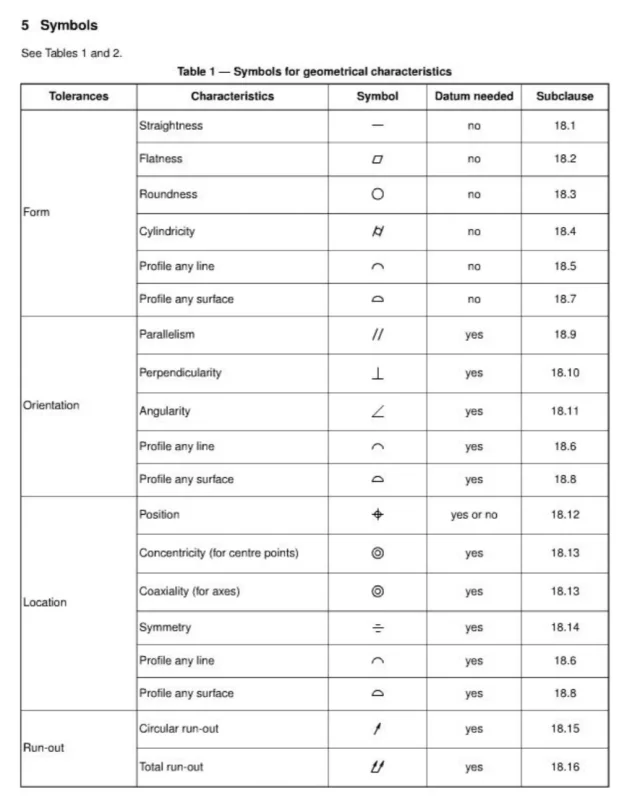
exists the symbol of "flat surface" and "parallelism". two concepts that have nothing to do with "complanation" which means from the Latin "plan with something else".
flatness cannot have a datum... because he has no reference with anything except with himself.
the parallelism need of the datum.
I also checked the latest standards.. .Screenshot_20230425_141146.jpgWe forget the concept of composing, which is not standardized and will come back to us all clear.
 
in reality we Italians have problems with words. In English, this is unequivocal.
exists the symbol of "flat surface" and "parallelism". two concepts that have nothing to do with "complanation" which means from the Latin "plan with something else".
flatness cannot have a datum... because he has no reference with anything except with himself.
the parallelism need of the datum.
I also checked the latest standards.. .View attachment 68198We forget the concept of composing, which is not standardized and will come back to us all clear.
the problem is that I can't forget it, because my need is precisely that: that the two faces, besides being perfectly flat and parallel, are common to each other.
As you rightly say, the concept of complacency is not standardized, and it seems to me a big gap.. .
 
just to contextualize the issue with numbers, if we want to get a "complanarity" between the two red surfaces of the first post of ±0,015 we will have to define a planarite on the single face of ±0,005 and a parallelismo between the two surfaces of ±0,005.
imagining that a surface will be stunned of +0,005 and the other -0,005 and that they are not parallel of 0.005 we will have a maximum extremity of 0.015.IMG_20230425_161837~3.jpgthe "complanation" symbol does not exist in gps.

iso 8015 indicates that even if we put the "planar" on multiple surfaces, it is indicated that the flatness is reported separately (explained in iso 1101:2017.... because of course it leaves doubt). if you put sz we will emphasize "separate zones".

a little more messed up is the cz that indicates concatenate zones. This feature allows in a non-independent way to group surfaces and define gps.
probably should allow with only one Planners to define that all surfaces bound by cz are from top to bottom planes equal to tolerance.
but it is a new and unclear concept.Screenshot_20230425_165019.jpgthis thanks to the iso 5458 of 2018 that allows to group "things" also against previous norms.

So the real problem is: if we design and design are not updated to the latest standards, how can we expect them to understand what to do in the workshop?

I would continue with the two separate directions (parallel and planar) or even the written note for extended to stupid proof.

with all these new standards you can no longer read the drawings.
 
Last edited:
the problem is that I can't forget it, because my need is precisely that: that the two faces, besides being perfectly flat and parallel, are common to each other.
As you rightly say, the concept of complacency is not standardized, and it seems to me a big gap.. .
You didn't read what I wrote.
is standard. You just don't know. look at the latest iso gps standards.
 
You didn't read what I wrote.
is standard. You just don't know. look at the latest iso gps standards.
News then confirm the use of the cz on the planar to make the complacency?
are quite new and unintelligent things. then if you do not use it every day you have to reread the norm a thousand times but it is not sufficiently exhaustive.
 
News then confirm the use of the cz on the planar to make the complacency?
are quite new and unintelligent things. then if you do not use it every day you have to reread the norm a thousand times but it is not sufficiently exhaustive.
I know, you're right. I personally try to educate on the new norms that ahimè are very little known. We must enter this perspective to improve technical documentation, without leaving room for interpretations.
 
I know, you're right. I personally try to educate on the new norms that ahimè are very little known. We must enter this perspective to improve technical documentation, without leaving room for interpretations.
I know you're training and that's a good thing. I try to do it myself, turning to sites and agencies and then discovering the new standards purchase and study.
surely the designs must be universal and understandable.
 
Now there are also czr... what do you mean?
and sim stands for?

poor us... and poor them . are not so vetoed yet it seems a nice chaos compared to the usual intuitive gps of the 80s.
cz=combined zones or common areas
czr=combined zone rotational only (not our case)
sim=simultaneous rerequirement (and possibly a sim1,sim2,... -if more sim-)
 
Unfortunately, in recent years, it is not easy to distract among the many regulations iso gps that change continuously. I think it's the square. the problem is that they are not transposed by those of duty. thinks that I still see designers (even very young) who share in this way =xxx= (to make an example). method abolished several years ago.
 
Unfortunately, in recent years, it is not easy to distract among the many regulations iso gps that change continuously. I think it's the square. the problem is that they are not transposed by those of duty. thinks that I still see designers (even very young) who share in this way =xxx= (to make an example). method abolished several years ago.
You have no idea ... that I also have them in the office and I get angry not little....like the 3x20° online quote or the seeger on the wrong side....
 

Forum statistics

Threads
44,997
Messages
339,767
Members
4
Latest member
ibt

Members online

No members online now.
Back
Top