• This forum is the machine-generated translation of www.cad3d.it/forum1 - the Italian design community. Several terms are not translated correctly.

distorted pattern extraction

  • Thread starter Thread starter exxon
  • Start date Start date

exxon

Guest
in a fe simulation (especially with inventor), can you extract the distorted model from the application of a load?

 
high-end fems (abaqus, ansys) always allow it, through saving in .stl .
I don't know. Maybe they don't support direct export via command from the gui of your software, but pre and post processing files somewhere must write them.
 
confirmation: from inventor you can not do. there are many requests from users who seem destined to stay dry.

I got stuck in a job that seemed simple and instead it appears to be a bitch: It's about designing a snap clip that has to hook on a round. in figure you see only half of the clip, the other is symmetric.
Clip.webpthe clip is pressed from the bottom, widens and then snaps in position.

the problem is that I have to design the shape to get a force with constant increase in the tract between the first and second drawing, but the contact angles vary according to the deformation of the clip...

the three cases above I got them graphically by capturing the screen, but for a decent model they would need hundreds of intermediate steps and the graphic way is improposable.

Any ideas?
 
“continuing increase” seems one of those rhetorical figures like “silent noise”... do you mean that the contact force between the clip and cylinder must grow linearly (i.e. having a constant increase) in the linear clip section? And why do you want this to happen?
 
However, regardless of your project intentions, if your purpose at analysis level is to pull out the contact force I would proceed like this:
- cylinder modelling and clip;
- I would assemble and tie them with parameters the opening angle of the clip with the depth of insertion of the cylinder in the clip, so that in the axieme it is always guaranteed the tangence to vary of one of the two parameters;
- I would import the axieme into a fem capable of managing the parameters, I would win the cylinder on the ground and impose a force at the bottom of the clip, I would model the contact between cylinder and clip;
I would set a parameter that at equal loads and constraints, varying the imported parameter (key position / clip opening) pulls out the contact force in the tangency point;
this is very feasible with the couple creo+ansys. In this way bypass the need to simulate that the clip widens (and therefore the contact point changes) because the cylinder exercises a reaction, simply falling in the case of a long series of static analyses. I think the approximation holds.
 
“continuing increase” looks like one of those rhetorical figures like “silent noise”. . .
English . .
do you mean that the contact force between the clip and cylinder must grow linearly (i.e. having a constant increase) in the linear clip section?
No. I mean that the force applied to the clip to hook it has to grow proportionally to the space it has taken.
And why do you want this to happen?
I don't want it, it's a specific.
... I would set a parameter that at equal loads and constraints, varying the imported parameter (cylinder position / opening clip) pull out the contact force at the point of tangency. .
it is not about changing one or a few parameters, such as the initial opening of the clip. the problem is to establish the general form of the elastic element.

the two lower rays, for example, substantially change the "k" of the spring, while the shape of the input fork varies the trend of the relationship between the applied force and the one used for deformation.

the trigonometric part of the model can be easily solved once the position of the highest radiation center is obtained according to the applied force, but it serves a method to obtain this information automatically to every variation of the initial form.
 
Forgive me but between “proportional growth” and “linear growth” what difference is there? I also meant the increase of the “race” of insertion of course.

Maybe you mean it can grow exponentially, just as it grows... I think it's something that needs to be better specified.. the concept of direct proportionality is not mathematically accurate enough.
in any case the parametric analysis, with parameters defined in discreet steps for obvious reasons, can have any number of parameters and can be questioned on each combination: do the stuff I told you, multiplied by n clips with different radiances and stuffing parts. from something like that I think it will be possible to leave. . take that and varies from an extra tot and less parameters that seem relevant to you
 
proportional growth and linearity are different concepts.
if then proportional becomes exponential then we come to creative mathematics.
better to leave otherwise the administrator must intervene again.
 
proportional growth and linearity are different concepts.
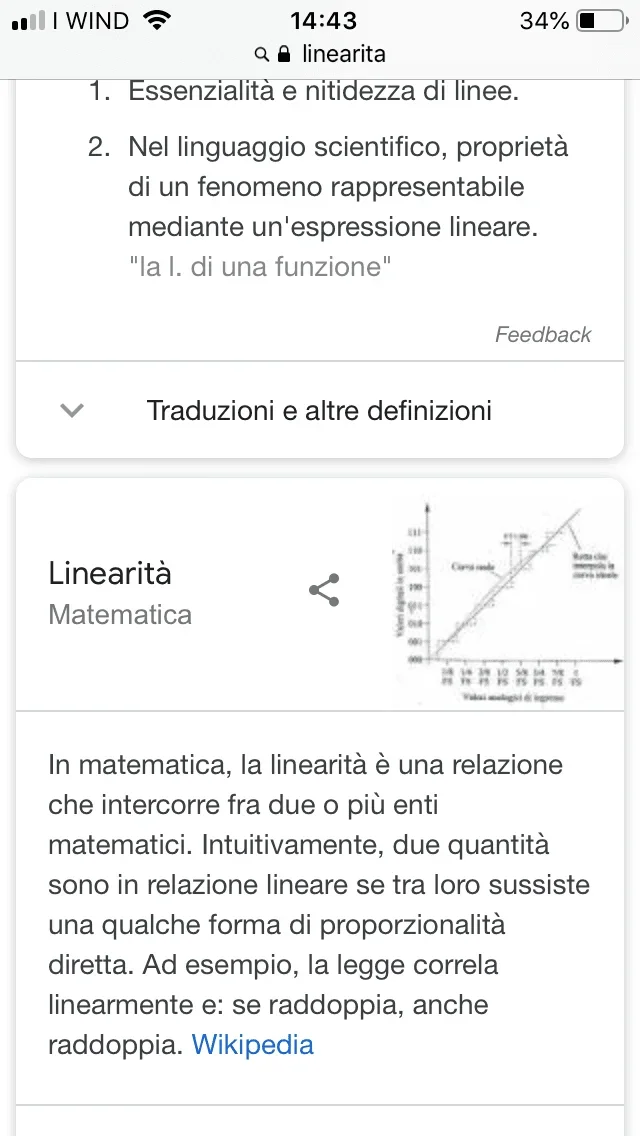
8FEBF9A2-C63D-4972-B45B-26C721BD228E.webpThat sounds like a line.
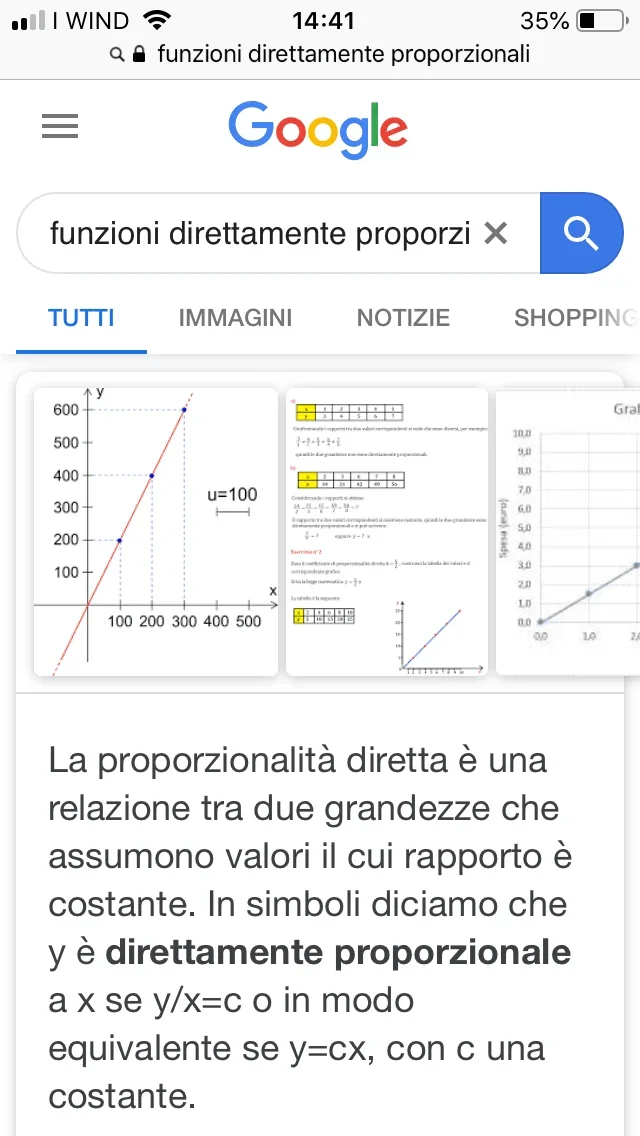
6B151FB0-0140-4566-81E5-5675CAAB8869.webpand in the definition of linearity it seems to me to speak of direct proportionality.........

ah already but you are a superior being who perceives the world quadrimensionally
 
That sounds like a line.


and in the definition of linearity it seems to me to speak of direct proportionality.........

ah already but you are a superior being who perceives the world quadrimensionally
As we are engineers and non-mathematics, I would say that the concept we wanted to express is very clear.

in the engineering field is linear all that 'describable from a first degree polynomial, I would say to let lose the want to split the hair in four and go to the goal.
 
Hello hunter! Please note that you are right beyond seeing it in a practical way or not.

In fact in both definitions brings an example of a line.. and look randomly in the image of proportionality cites as example the function y = c*x which at my home is a first degree polynomial. Is that the two things are connected? ?
 
in the engineering field is linear all that 'describable from a first degree polynomial
but not in a dream.

I have a gentleman agreement with the administrator not to feed the controversy, and so I end up here.

I invite students who happened by chance on this thread to carefully deepen the topic: in particular the difference (substantial) between linearity e proportional growth (the latter equivalent to the concept of drift or constant slope).
 
Look, I'm seriously worried.
+strong, therefore according to you the “proportional growth” (? Perhaps it would be better to say direct proportionality.. is the particular case of linear function passing through the origin?

ah no aspe but exxon said that the polynomials of the first degree are not linear, so, beyond my consideration, you were already wrong with the first formula you wrote
 
I hold my madness
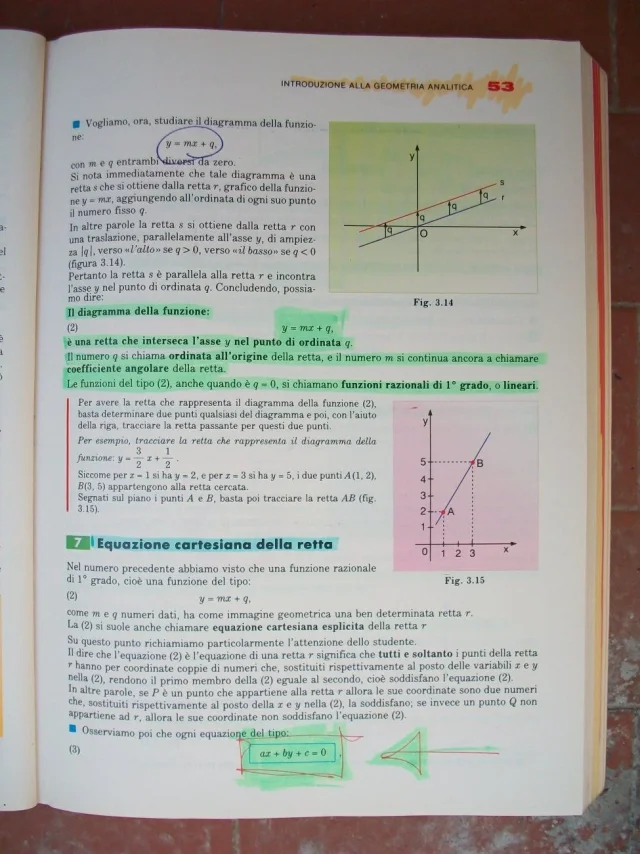
I almost never read wikipedia, I have a bag of books, the images of the mess 9 are math explained badly
pictures taken from v2 of 5 of zwirner for superior:funzionelineare.webpproporzionalitàdiretta.webp
 
but not in a dream.

I have a gentleman agreement with the administrator not to feed the controversy, and so I end up here.

I invite students who happened by chance on this thread to carefully deepen the topic: in particular the difference (substantial) between linearity e proportional growth (the latter equivalent to the concept of drift or constant slope).
I meant that in any u.t. or assembly workshop the two concepts are synonymous, i.e. a law of type y = kx (possibly +c), although perhaps theoretically they are different things. then I do not understand the reference to the gentleman agreement with the administrator: You can peacefully disagree with the opinion of other members of the forum, as long as you do it without transcending tones.


However returning to the topic: What your client wants is a relationship like,
f = k * l, where f is the strength resistant to motion and l is the linear shift of the spring bond point, right?
 
+forte looks that in the first photo you post there is papal writing that all functions of the type : y = mx + q are called linear functions, even if q=0.

put it as you want, but any source we look at, when talking about linearity, we are proposed the image of a straight and the equation of a first degree polynomial.

for exxon the thing is not true “even for dream” but its clarification is late to arrive. . poor students looking for the concept of linearity and find it wrong both on google and on the books where they will have to look?
 
but not in a dream.

I have a gentleman agreement with the administrator not to feed the controversy, and so I end up here.

I invite students who happened by chance on this thread to carefully deepen the topic: in particular the difference (substantial) between linearity e proportional growth (the latter equivalent to the concept of drift or constant slope).
I'm curious to know, too.
"I have a gentleman agreement with the administrator not to feed the controversy" ... who knows why!
 
even proportional growth is “equivalent to the concept of constant derivative” ... and linearity is not?! ?
 

Forum statistics

Threads
44,997
Messages
339,767
Members
4
Latest member
ibt

Members online

No members online now.
Back
Top