• This forum is the machine-generated translation of www.cad3d.it/forum1 - the Italian design community. Several terms are not translated correctly.

fillet seal

  • Thread starter Thread starter Guido
  • Start date Start date
the response of 75% of cutting-resistant area comes from basic formulas, where it says that applied a cutting force t on a circular section of diameter d and having area a, the cutting tangential voltage is calculated as:
\( \tau=\frac{4}{3}•\frac{t}{a}{a}=\frac{1}{0,75}•\frac{t}{t}{a}{a}{a}{a}{a}{a}{a}{a}{a}{a}{a}{a}{a}{a}{a}{a}}{a}}{a}{a}{a}}}{a}{a}{a}}{a}{a}{a}{a}{a}}{a}}{a}{a}{a}}{a}{a}{a}{a}{a}{a}{a}}}}{a}}{a}{a}}{a}{a}}{a}}{a}}}}}}}}}}}}}}}{a}{a}}{a}}}}{a}}{a}{a}{a}{a}{a}{a}{a}{ \)

the reverse of 4/3 is 3/4 i.e. 0,75 i.e. 75%.
Thank you. @meccanicamg for the answer.
Forgive me, but I can't figure out the situation.
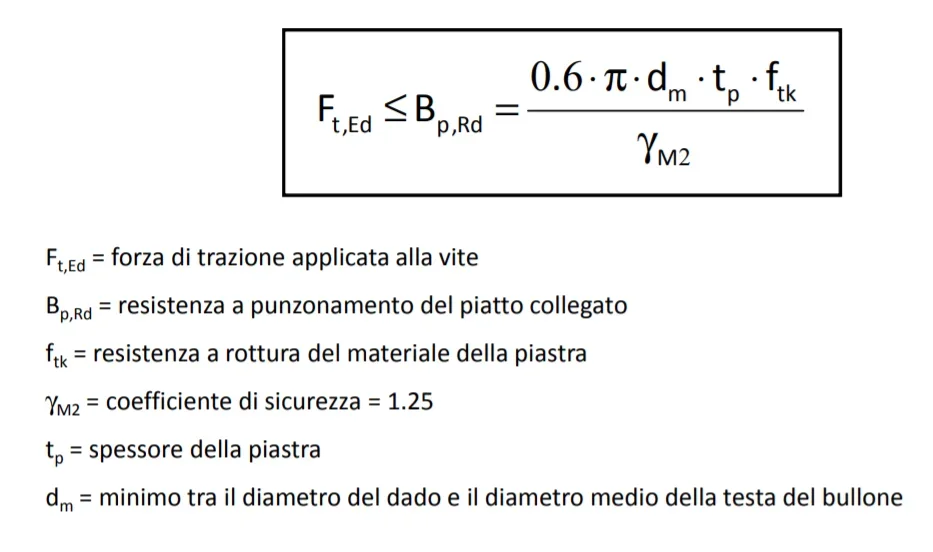
I had imagined a sort of punctuation verification where 0.6 I imagine is a approximation of 1/sqrt(3) and the thickness of the sheet was the intake part of threads (pass x number rpm)Cattura.webpI thought the section was the cylindrical one given by a strong diameter for the height of the intake threads. and that once developed it was rectangular.

I can't see the circular section you're referring to... ?
 
Thank you. @meccanicamg for the answer.
Forgive me, but I can't figure out the situation.
I had imagined a sort of punctuation verification where 0.6 I imagine is a approximation of 1/sqrt(3) and the thickness of the sheet was the intake part of threads (pass x number rpm)View attachment 63028I thought the section was the cylindrical one given by a strong diameter for the height of the intake threads. and that once developed it was rectangular.

I can't see the circular section you're referring to... ?
in the theory of screws, there is always a resistant diameter that is not hazelnut but something more. If you are looking for the numerical definition. It's the one that's holding up. If the stem is smooth it will be that diameter. if the stem is all threaded will be resistant diameter.
do not look at the formulas of the eurocode 3 because these demonstrations have more than thirty years....
 
pierarg is not on the baldassini... I got it a long time ago, since it's of interest, I put the procedure.
method for sizing mating length and verification at surface pressure of the coupling type.
I send this post because looking at the formulas I find that k is the opposite to that written. if I have left f and then to the numberer sigma (vite) and h, while to the right I have fs with sigma (madrev.) to the numberer, port to the right everything except h I will have sigma (madrev) / sigma (vite). Am I wrong?
 
I send this post because looking at the formulas I find that k is the opposite to that written. if I have left f and then to the numberer sigma (vite) and h, while to the right I have fs with sigma (madrev.) to the numberer, port to the right everything except h I will have sigma (madrev) / sigma (vite). Am I wrong?
in fact looking on the internet I found some dispenses of young petrucci with this same reasoning but the formulas of force yielding lives and mothers are inverted compared to those written here.https://sites.unipa.it//giovanni.petrucci/disp/bulloni.pdf page 2
 
I send this post because looking at the formulas I find that k is the opposite to that written. if I have left f and then to the numberer sigma (vite) and h, while to the right I have fs with sigma (madrev.) to the numberer, port to the right everything except h I will have sigma (madrev) / sigma (vite). Am I wrong?
actually k must be greater or equal to one. therefore will be the relationship between the maximum yielding and the minimum yielding evaluated between lives and mothers independently.
any of the two weak elements must allow to stretch the number of threads in socket.
 
Good morning, everyone. I would like to pay attention to the problem but in a different reading key, I will explain better:
are designer in a glass facade company where as a lattice we have the aluminum profile structure. for this reason we often find ourselves in the condition of having to connect different architectural elements, such as frangisole fins etc. , with screws directly on the aluminium screwdriver without the possibility to put the contradado.
simplified the question, and avoided even the whole thread of the problem of the tearing of self-tapping screws, I present to you my last practical detail:
I have a 4mm alloy angle 6082 t6 (approximately 300mpa) which will be the attachment bracket on which I go to perform a passing m8 thread, then mumps. I must therefore choose the most suitable screw material so that the thread behaves in the best possible way given the unhigh thickness. I have very low loads so we will never reach even 30% of the permissible load, but of course it is for a matter of security/guarantee over time since it has to stay on 50 years. Therefore following the reasonings on which we all seem to agree, and given also the formula of mechanicmg for which it is always better to have the material of the screw equal to that of the mothervite, I thought to an aluminum screw just in alloy 6082 t6, and I would also have found several producers that would make it without problems.
if not that I have a moment wrapped in determining the pure tear resistance of the mothervite.
with the formula of mechanicsmg it is possible to determine the minimum length of coupling (which would return among other) but it is not possible to determine the tear value of the mothervite.
as indicated by other users, there is an online calculator of the bossard, this
screw length calculator . and now comes the beautiful:
By setting the parameters of my case, (to simulate aluminum screw I used the expedient to use steel with the lowest possible resistance) I get a tear resistance of 506kg.
then trying instead to increase the resistance of the screws, e.g. class 70 since I am forced to use stainless steel being an external structure, the tear resistance of the mother-in-law though slightly increases (instead that I decree as I would have expected).
but is it actually the reality?
Did someone get the formula used by this online computer?
in any case for my application, I am however oriented to go ahead with the aluminum screw, as the stainless steel is a much more noble material of aluminum, and in condition of humid environment you create galvanic couple for which the aluminum thread could also disappear within a few years,....
 

Attachments

  • Carico strappo vite alluminio.webp
    Carico strappo vite alluminio.webp
    38.2 KB · Views: 17
  • carico strappo vite inox cl 70.webp
    carico strappo vite inox cl 70.webp
    33.7 KB · Views: 16
just put the thread inserts (like those of the fixes) and you increase the grip length as well as use steel threads
 
Of course making a threaded hole from m8 on 4mm thickness, means that at least 1 mm on the thickness you lose it with the bevels. then you find yourself having 3mm useful to contain (pass 1,25) little less than 2 threads and a half.
being few threads in the socket could be able to collaborate correctly with 2.4 threads.

under these conditions, if you use for outdoor you must avoid the stack effect and therefore it would be good to have the same material.

at the operating level it would be better not to use male cutting but males for plastic/rolling deformation. In this way inflate the material, do not cut the fibers and incrude the aluminum.

probably the variation of the resistance from iron screw to stainless steel screw is the behavior of the elastic module, which although similar, is not identical.
 
Bye!
Meanwhile thank you very much for the suggestion on operational execution that I will certainly indicate on the production cycles.
However I realize that it is little, but we have 20 thousand connections of this type and increase also of 1mm means increase the cost of the application 5/6 thousand€. then as I said, in fact from the calculation report in the ultimate limit-state combinations we arrive at a max of 150kg traction, we are quiet.
as I said the problem would simply ensure the seal of the thread over time and highlight in relation to the tear resistance of the thread of the mothervite.
However always for the bossard calculator I have made various tests, and I do not think the elastic module enters into play, because the tear resistance of the mothervite, always though little increases to the increase of the resistance of the material of the screw whatever it is...... .
 

Forum statistics

Threads
44,997
Messages
339,767
Members
4
Latest member
ibt

Members online

No members online now.
ciao
Back
Top