• This forum is the machine-generated translation of www.cad3d.it/forum1 - the Italian design community. Several terms are not translated correctly.

project reducer

  • Thread starter Thread starter picc
  • Start date Start date
Hello mechanics! Sorry about my absence, but I was busy with the other project. Anyway I wanted to thank you for the material you posted!
I went ahead in the design of the toothed wheels and in their verification, and passed to the sizing of the intermediate shaft (the one on which the wheel 2 and the pinion 3) are calettate. I'll attach the excel spreadsheet to show you what I did.
Now I have problems choosing bearings: we were asked to choose the bearings so that they had a useful life of 25,000 hours, and knowing that the number of laps on the intermediate shaft is 180 rpm, it turns into a duration of 270 million turns. the choice is relapsed on a conical roller bearing model 30203 j2 from the skf catalog. now here begin the doubts:
1) is mandatory to choose two x or o-mounted conical roller bearings, or is it possible to mount for example a conical roller bearing on one side and a radial ball bearing that must only support a radial load?
2) in the calculation of the useful life of the bearing the askf fact depends on the ratio of viscosity k, and the value of the optimal viscosity is derived from a table according to the number of turns of the shaft and the average diameter of the bearing. as the reducer works at a temperature other than 40 c° (temperature to which the values of the viscosity of the various oils in the diagram mentioned above), to obtain the optimal viscosity at 70 c° the other diagram that binds the operating temperature with the viscosity of the various iso oils. Now what I do not understand is what is the value of optimal viscosity, and what value I have to choose viscosity for the oil that will be used.
3) with regard to bearing mounting, usually how much space is needed to be available for the installation of bearing locking systems (such as wreaths), how much space should be left between toothed wheels and bearings and how much between the two toothed wheels?
Moreover, in order to proceed to the fatigue test of the tree in question I also need the dimensions of the shoulders and their connection rays, how can I decide these values?
Sorry the length of the post and thank you so much!
 

Attachments

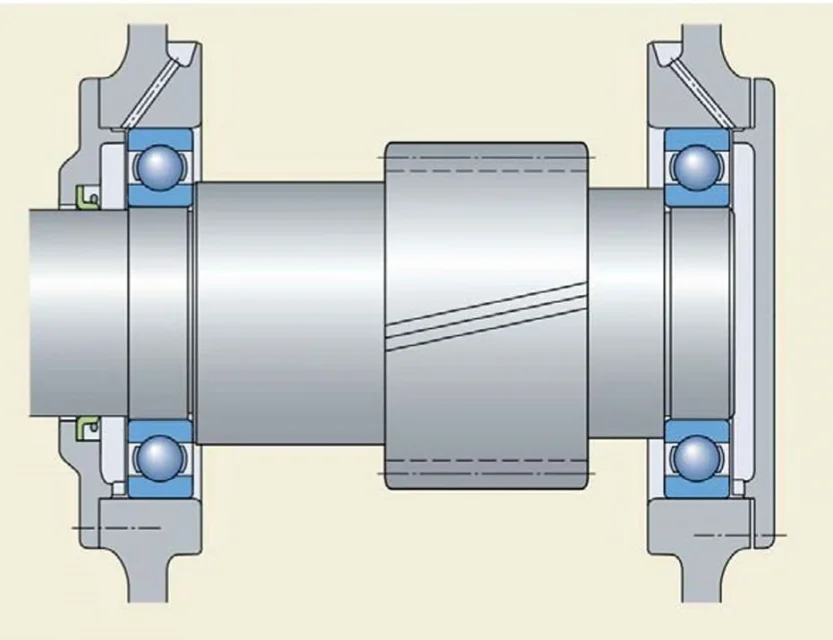
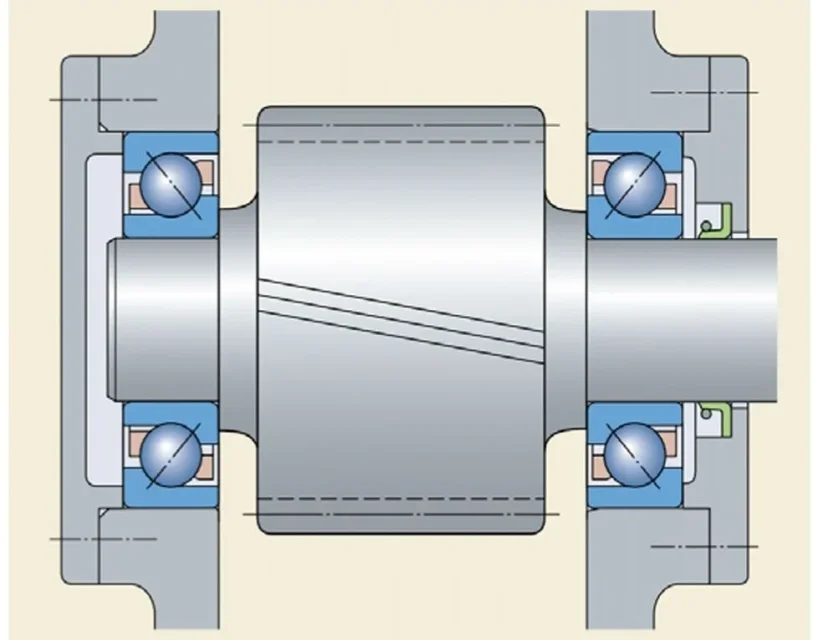
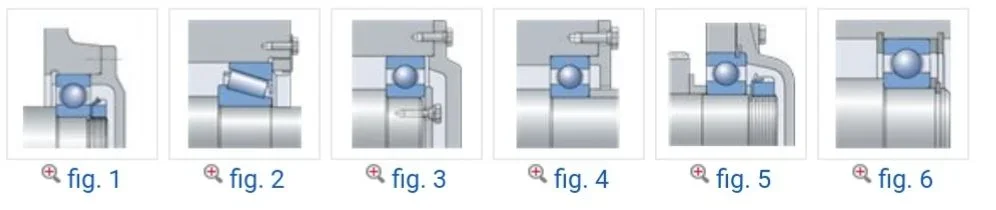
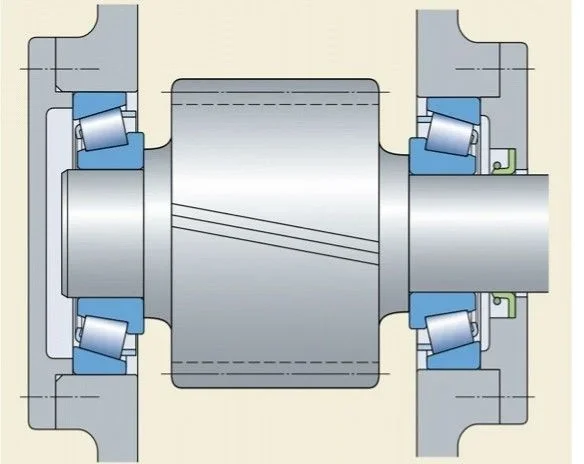
if you decide to mount conical roller bearings you are obliged to put two on the shaft and this is the standard condition of almost all gearboxes and mount like this:IMG_20190425_124024.webpthere are other mounts that work very well and I can go from two ball bearings (just check the loads):IMG_20190425_124457.webpspheres with oblique contact:IMG_20190425_124325.webpdouble crown of rollers and a carb:IMG_20190425_132158.webpI personally do heavy machinery prefer to mount two ball bearings with two oscillating rollers, one of which is stuck axial and one floating.
 
As for oil to be used, I can tell you that industrial gearboxes use oil iso vg 220 that have a viscosity index at 95°c equal to 220cst.
in case your reducer works at 70°c when it is at a regime you should be at about 50mm2/s of real viscosity.
while once you have calculated the average diameter, interpolate with the number of turns and get the relative viscosity.

each bearing has indicated shoulder diameters and fitting rays to make them support well.

space for wreaths and space has no special rules but perhaps it is better to place a design in order to be able to understand us otherwise we speak of fried air.
if the reducer must be compact it will not have too long spacers (5-10mm) but everything is relative.
for the wreath the threaded tract on the shaft is done about once and a half or two compared to the length of the wreath but it is not said that it is so because it depends on what and how it has to be.

for the shoulders where it supports the gearing and its connection radius you need common sense and a little proportion.

standard tools have a point radius of 0.4 and 0.8 mm....without making any effort ....where there is no radius to be respected you can choose between them.

to build everything from scratch you try to make the distance between the bearings as little as possible, then clearly it changes for needs, bands changing etc.
 
Last edited:
I was generally looking at your excel sheet and I think something can be said:
- in general having 12 decimals is useless, so one thing to do is adjust the output value with one...two or three decimals depending on what it is and what importance we are talking about
You're not using full excels and still write unrelated numbers. example write itotale 16, then write first report 5...but the second report you have to calculate it as 16/5
- the verification value, the coefficient 2 or 1.2.... are inside the formula but if one doesn't fit that number he does? Besides, with what criterion do you really do a static verification with lewis using coefficient 2? idem on 2% control of the reduction ratio....have you done less...and no more? What if I want to do 3%?
I see so many parameters and many things, but the important ones are missing. where are the way, head and middle training diameters? the rays are not used explicitly but this is lazy
- I saw that static lewis is 100% ft while fatigue wear/pitting you did 70% but this if it does not have a precise design reason is wrong. Please note that you may have the k0 coefficient which is the application coefficient but normally is greater than or equal to 1 and not less. especially if you use any standard for gears do not find this reduction of strength
- you do a sizing and 3 checks... but static pitting does not exist especially if the reducer turns and does not stand under load
- for the evaluation of the trees the comma 125 cannot be seen
- 70% more strength? the gp verification made so it does not serve anything if you do not value a carving
 
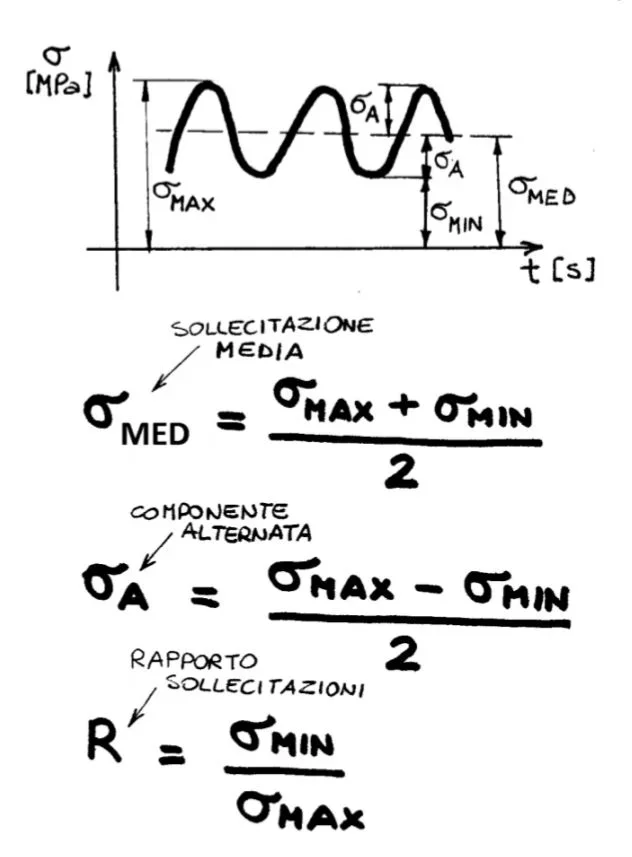
As for fatigue testing with gough chickenard, you must first identify the stresses.IMG_20190425_201140.webpIn your case you will have a constant torsion due to the couple and a symmetrical flexion to zero, due to the forces started between the teeth.
you have calculated parameters that I have neither understood nor why and above all lacks the consideration of the intellect you have to assess.
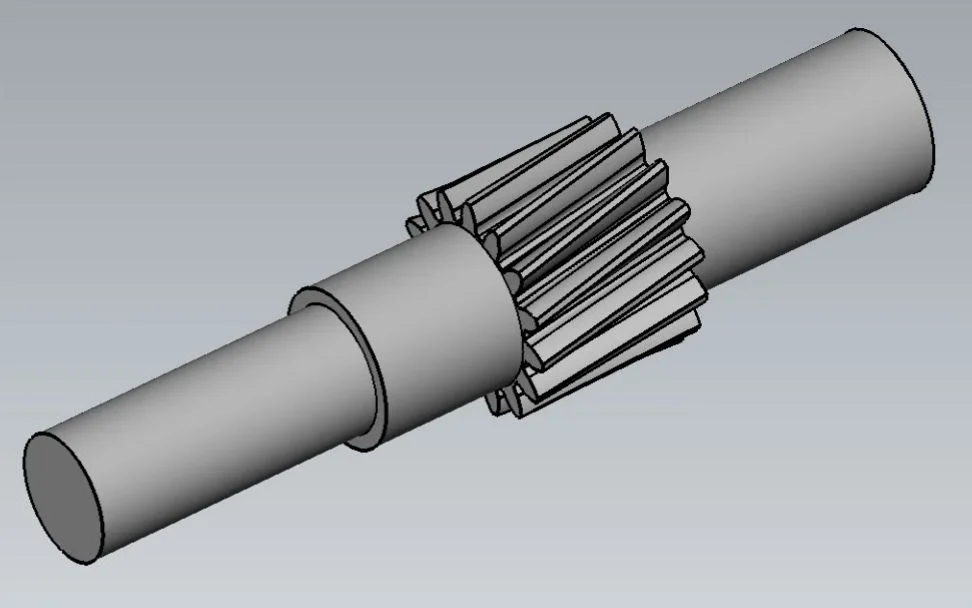
the calculation scheme is as follows:IMG_20190425_201002.webpSince you are analyzing the second axis will be realized by a pinion made of piece with tree and a wheel with tongue.Screenshot_20190425-201718.webpSo in your case, I think the most solicited area will be to be analyzed on the wheel's calettamento diameter where there will be a tab seat and a connection radius with the wheel support shoulder diameter.IMG_20190425_201958.webpKeep in mind that I am using a simplified 3d model that I did at the beginning of your project that I then no longer updated for time issues. on this last image are missing the diameters of housing bearings, seeger seats and/or end-step wreaths etc.
you are now obliged to throw down a physical model, even to evaluate distances, encumbrances etc, because having never done gearboxes and do the estimate only with numbers on excel you make a lot of effort and you do not see everything.
 
I found that the cell in question does not contain the formula despite having a value with so many decimals.IMG_20190425_211008.webpisn't that you're using kingsoft office 2016? I remember that he has a kiss in his excel son who occasionally does it randomly and doesn't notice.. No number change.
If you have to update it and see if the new version doesn't have a kiss. otherwise put libre office and you are appropriate.
 
Then I start responding slowly:
- all those decimal numbers is true do not make sense, and I have already arranged the formatting of cells with two decimal numbers only;
- then regarding the safety coefficient of static lewis we say that it does not make so much sense as it has just started to dimensional the wheels dentate from this, while regarding the c.s. to fatigue the value of 1,2 we was given by the professor as a minimum to respect;
- as regards tolerance on the total transmission ratio of +-2%, we have been given as a condition to be respected in the project track;
- with regard to all fatigue tests (including intermediate shaft tests) we have been told, always as a condition to be observed in the track, to take account of 70% of the nominal power, while for static checks and bearing size we have been told to consider the nominal power to 100%;
I don't understand what you're talking about.
- with regard to fatigue testing in the most stressed section, i.e. in the pick-up section of the pinion 3 (which I wanted to make of piece and then eliminate the presence of the quarry on the tree) we say it was a simple test as it should be carried out also for all other sections, however as mentioned above all fatigue checks must be carried out taking into account 70% of the nominal power;
-Finally the value cell is not incorrect, to solve the equation that binds σamm with von mises I used the excel solver, so that's why you don't see any formula
 
As for the schematization of the tree, I made a very good drawing by hand, but where I try to show you a cad model to understand us better. then as project data relating to the encumbrance, the professor told us to respect those of our reference reducer (tramec 63b), taking into account that we have a tolerance of 10%. therefore in our case, being the axial engrave of the reference gearbox pairs to 101 mm, I have to deposition 111,1mm to let the intermediate shaft and the thickness of the carter enter. I thought so:
-111mm-10mm (often carter from both sides)-2mm(empty space to leave to live the contact of the carter walls with the shaft)=99,1mm
- for safety I decided to take as value of the length of the 96mm shaft
-96mm-21mm(wheel band width 2)-40mm(pick sprocket width 3)-(2*13,25)(selected conical roller bearing width)= 8,5mm
- So I decided to divide the remaining space as follows: 3mm space between bearing and wheel 2, 3mm space between pinion 3 and bearing, 2.5mm space between the two wheels.
Now there are great doubts: I do not know if the free space left between the various components is sufficient to obtain the desired fittings, or at least if it is enough for the mounting of the bearings and the entire structure (which I do not think so). In fact, in the drawing that I attached you the bevel at the two ends of the tree is as if there were not in the accounts that I did, considering that where the tree begins, there is already a bearing.
 

Attachments

  • WhatsApp Image 2019-04-25 at 22.23.33.webp
    WhatsApp Image 2019-04-25 at 22.23.33.webp
    132 KB · Views: 27
ok, nice track to 70%, however know that it is not really how your prof indicated you because if the reducer is used at maximum power that remains.

the wrong thing in the drawing is the fact that you make the connection on the tree and you don't let us go in line on the shoulder nothing and so you can't mount anything.
the toothed wheel with hole and tongue will have the bevel on the hole example 1x45° while the shaft will have the diameter with support shouldering with radius 0.8.

idem for bearings, where the shaft has a rectification discharge or a radius smaller than that of the bearing.IMG_20190426_071223.webpSince you have solidworks I recommend you mount everything in 3d so you better realize.

If the sprocket you do it by piece and untied you can lean the wheel against the pinion gear and gain space.
 
what I mean as a tree is very similar to this:IMG_20190426_084050.webpto do not lose bearings you can mount i seeger on the sides.all can carry it to pack with spacers.
if you need to tighten the gear band, you can take in cementing material and earn on the length.
in your case the wreaths are not there.
 

Attachments

  • IMG_20190426_084050.webp
    IMG_20190426_084050.webp
    165.9 KB · Views: 8
For example, you can evaluate to mount a seeger with a spacer to be shaved to the assembly that pushes the bearing, or to save space eliminate the space and rest the bearing to seeger. or still do not put the seeger and fit the bearing as it is provided that there is the right distance between the two shoulders of the two bearings so fleet approximately 0.05mm and you are affixed.IMG_20190426_170921.webpOne thing you should do is mount the wheel with tongue using interference between hole and tree, so you will not have games during operation and you will not have axial thrusts that will move the bearing game. therefore you will have to do the calculation of interference to decide which tolerances to allocate to the coupling. Keep in mind that if the wheel does not pass from the hole in the carter, you must have the carter in two half otherwise you do not thread anything.

You can also see from my image that everything goes in line on the faces of the shoulders and not as in your design where the tree looks like a caterpillar?.

other note: the band widths of the gears do not almost ever equal because you would eat the edge and if you move assially decreases the useful transmission band, so where you have space do the different bands.
 
Last edited:
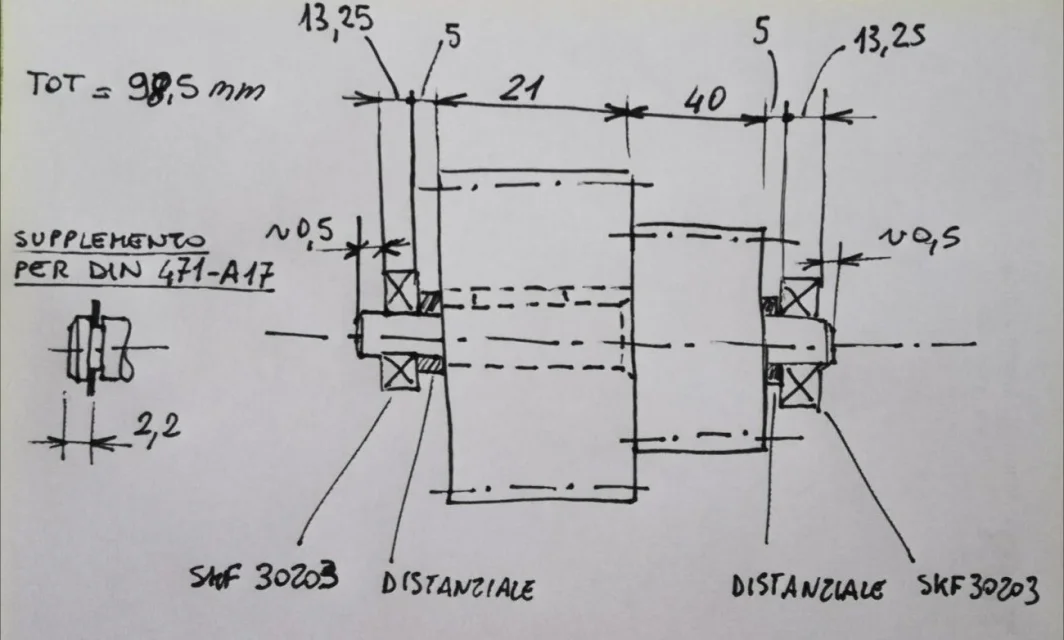
According to me, taking your data and reassembling on the axis, you can have the maximum length of 98,5mm if you do not notice the seeger and 102,9mm if you mount the seeger on both sides.IMG_20190426_173814.webpseems reasonably compact.
also you can think of reducing the 5 mm spacers and bring them to 2mm.

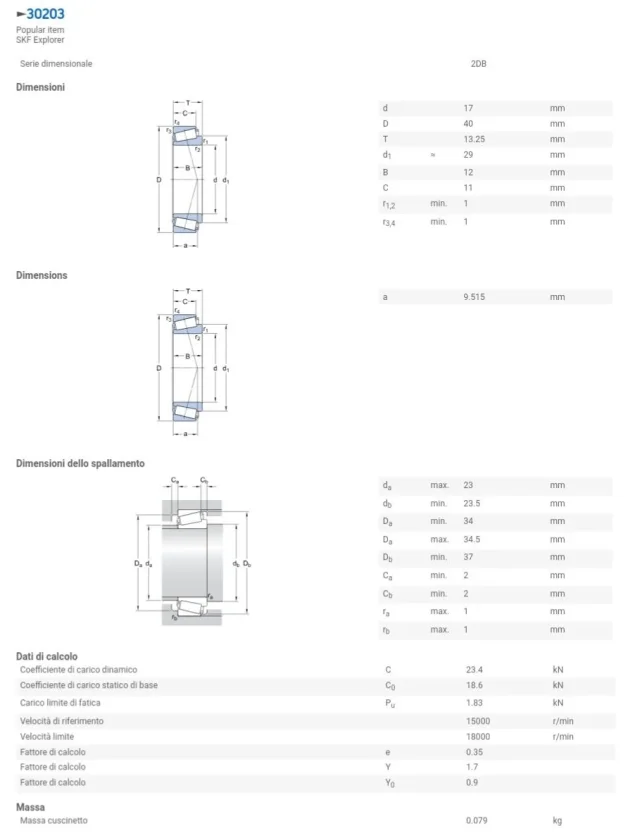
just to tell us, your bearing is this:IMG_20190426_174935.webp
 
Last edited:
Thank you so much mechanics! the bearing you placed is the one on which the choice has fallen, in fact, even if it has a useful life much greater than the 25,000 hours, but this we say is the most "dark" among the conical roller bearings.
I would still have a lot of doubt about the assembly of bearings and mechanisms (ghiere, seeger etc.) used to block them, where can I find some documents that make me understand something?
for example looking on the internet info related to the seeger rings I did not understand one thing: from what I understood they should act as removable shoulders to mount on the tree, but I also found other elastic rings that are attached on the outer crown of the bearing, and I think they serve to bare the outer ring with the support of the structure (but I am not sure).
Also in the drawing you placed with total length of 98,5mm, I do not understand how it is possible to block the bearings without a seeger ring, i.e. I do not understand what it means to make the bearing fit while respecting the shoulder distances of the two bearings.
 
Last edited:
then seeger rings are to be mounted on the trees and the series to be mounted in the holes. in both cases they create a line that resists axially to a force indicated in the catalog. to make them work well you need to have a "right" measure and maybe adjustable by grinding ring or a cup spring that keeps everything pushed.
the assembly with a wreath instead previews more space and in the end the force of the threaded wreath pushes towards the package that must be together. If you have a safety rosette then you don't get out.
If you're at the magisterium. ...cazzarola you should have drawing books, mechanics and design of mechanical organs and some manuals where there are explanations and drawings.
on the site skf there are all explanations of assembly of the wreaths and what else. There are also paper manuals for free students to request.

in my system everything does not move because the outer covers hold the outer rings of the bearings at a fixed height. being that the inner rings of the bearings are packaged on the shaft due to spacers and wheels, everything can no longer move axially except for the expansion game to leave.
this is found at the post of possible bearing configurations.
img_20190425_124024-jpg.53325
you have to put two gears in place of one and everything is nice and over.
you have to learn to see more critically a design and grasp the essence of its features otherwise once finished the university will be hard....parecchio. .
still not be afraid to ask.
 
in the specific they have rewritten the web pages of the site skf and are now made much better.
If you look qui you will find all explanations for seals, constraints, pushes, axial locking etc.IMG_20190426_203828.webpand you will find the differences between the various lockings with safety wreath and rosette, rather than with threaded ralle, with screw flange, external flange of bar, seeger on the special outer ring, classic seeger.
 
I was looking at the skf online catalog of conical roller bearings but the smallest with dynamic load and less than you chose exists and is 30202.IMG_20190426_221156.webpWhy didn't you use this?
let's see if the calculation works.
as I am running I hypothesized fa=1kn and fr=3kn to 340rpm.
e vale 0,35 fa/fr=0,33 then the equivalent load calculation is p=fr=3kn.
== sync, corrected by elderman ==
c/p=6,1 high to 10/3 makes l10=430 million turns i.e. l10h=21080 hours that is the base duration according to iso 281.
from here we pass to the speech lubrication to have a realistic estimate of operation with askf.....the average diameter is 25....so v1=65mm2/s and with oil iso 220 to 70°c without filter with normal impurities (0,3) I get v=52mm2/s then k=0,8 and askf=1,1 approximately that multiplies l10h to give lnmh=23188ore.
If your loads are slightly less you can reach 25 thousand hours... .or from the beginning your 17 mm diameter bearing is not as oversized as you said.
I suggest you check your values and check the bearing correctly, maybe with the skf tool with plausible hypotheses.
I've been counting on curves and on a 5-inch phone... I may have taken exact numbers... .
 
I have seen that I have considered 1700rpm instead of 900rpm....so you will definitely go over 30 thousand hours.... But make sure you do.
As for the calculations according to iso 6336 that you should have done there are many parameters that you left to 1 and sincerely you are oversized 5 to bending and 2 to pitting... other than taking 70%..... is as if you had taken 30%.
calculate all the factors of the two tests hard because we are not there.

I get very big things for the first couple...IMG_20190426_232238.webp21 mm ste face carry a house....even if you bring them to 15mm... chocolate you can make the wheels... other than compact becomes?

with a caga that you can't or don't want to use the profile shift you are using an almost double inter axle and the wheels are large non-great pans. If my parents on the first page were in the carter of the tramec.... how will your parents stay there?
 
Last edited:
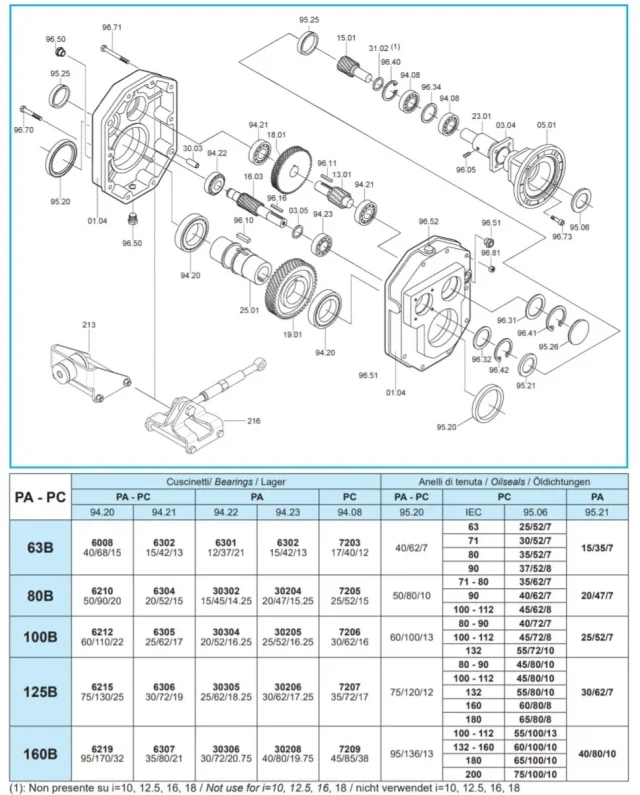
I was no longer looking at the catalog because it is not that I need much.... but you who have to "copy" have the exploded with the drawings and also the bearing abbreviations...... everything you have.... everything... so that at the first stage they mount the ball bearings... .IMG_20190426_234604.webpAll the piece pins....no seeger on the trees....zero wreaths... and all the answers to your questions.
But it is right to break our heads and understand why we have come to this solution.
 
we changed bearing and chose what you posted, and in fact it happened also with this. As far as the values of the parameters relative to the toothed wheels are concerned, many values have been suggested to leave them unified, as they would vary very little. the system with our dimensions however should enter the encumbrance as we have a tolerance of 10% regarding the reference one to the catalog. Moreover the bands we left them of that size because in pitting the safety coefficient is not very high.
However I attach the cad of the intermediate shaft I had done yesterday with the bearing with d=17mm, it seems that as a solution is quite compact since the shaft came along 92,2mm
 

Attachments

we changed bearing and chose what you posted, and in fact it happened also with this. As far as the values of the parameters relative to the toothed wheels are concerned, many values have been suggested to leave them unified, as they would vary very little. the system with our dimensions however should enter the encumbrance as we have a tolerance of 10% regarding the reference one to the catalog. Moreover the bands we left them of that size because in pitting the safety coefficient is not very high.
However I attach the cad of the intermediate shaft I had done yesterday with the bearing with d=17mm, it seems that as a solution is quite compact since the shaft came along 92,2mm
Could you post the step because I'm not at work, so I'll give him a look at his phone?

I was looking but you have safety coefficients half of me... they that I also used 70%. I don't believe there's a x2.
 
Last edited:

Forum statistics

Threads
44,997
Messages
339,767
Members
4
Latest member
ibt

Members online

No members online now.
Back
Top