meccanicamg
Guest
from the various books that report the indications on the torsion, there is to evaluate the torsion component in tension mpa with the generated angle. In essence it is like the speech of the supported beam that loaded flette and if the bending is less than l/2000 can be considered rigid for the carpenters and the/4000 for the mechanics.
the formulas for calculating the twist bar are these:
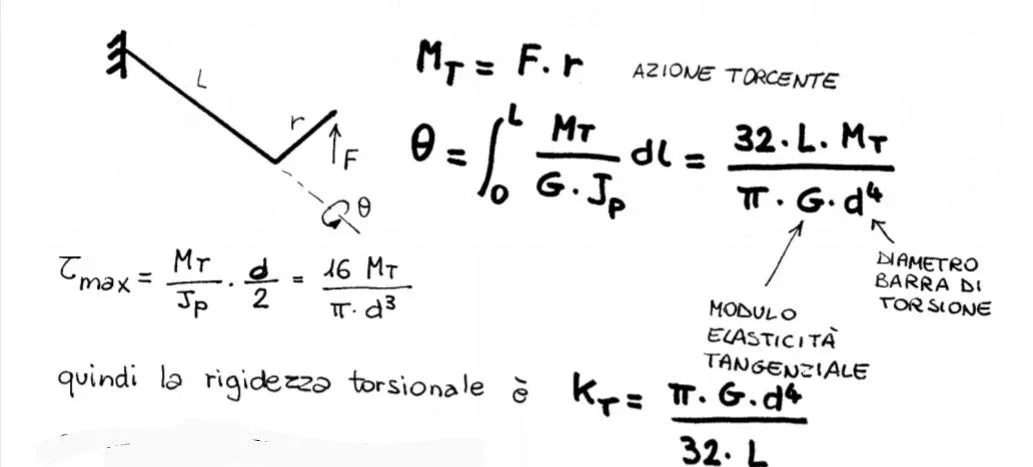 Similarly we have a torsion tension to be evaluated with the twist angle. generally using as a limit angle 0.25 degrees/meter you have that the system is also guaranteed as regards torsion cutting tensions. the more the beam is twisted and the more the tension is limiting. the more the beam is lean and the more limiting the angle.
Here are some examples:


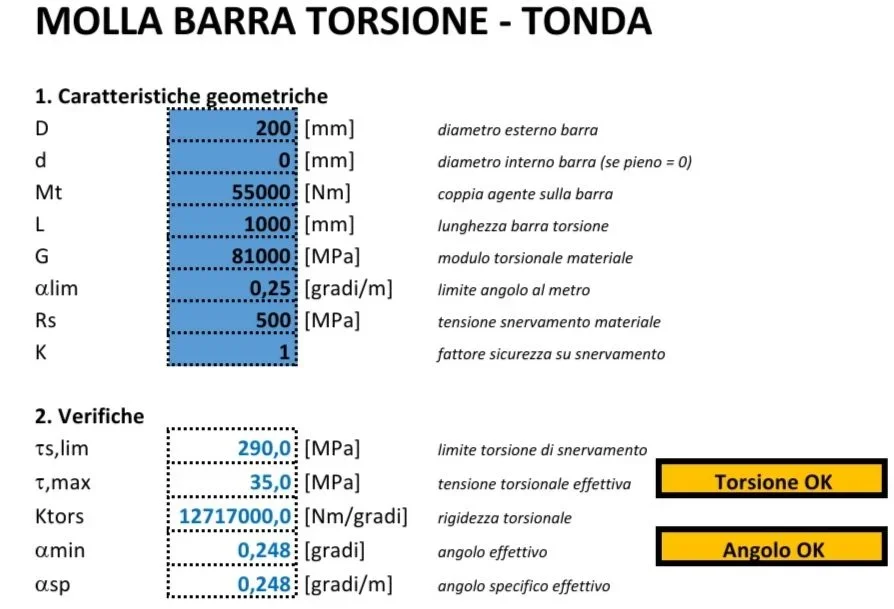 when torsional stiffness, i.e. the torque elastic constant reaches limit, you have the maximum angle value. in the central case was still the torque moment.
They are usually empirical values but are dictated by comparison and calculation just performed. you remain in the elastic field and therefore you have no permanent deformation.
the calculation field is usually 0.25°/m for rigid and 0.5°/m for non-important elastic things.
to have more explanations you have to go to look at the treatment of torsion coffins such as springs, fatigue loads etc.
the formulas for calculating the twist bar are these:
Similarly we have a torsion tension to be evaluated with the twist angle. generally using as a limit angle 0.25 degrees/meter you have that the system is also guaranteed as regards torsion cutting tensions. the more the beam is twisted and the more the tension is limiting. the more the beam is lean and the more limiting the angle.Here are some examples:
when torsional stiffness, i.e. the torque elastic constant reaches limit, you have the maximum angle value. in the central case was still the torque moment.They are usually empirical values but are dictated by comparison and calculation just performed. you remain in the elastic field and therefore you have no permanent deformation.
the calculation field is usually 0.25°/m for rigid and 0.5°/m for non-important elastic things.
to have more explanations you have to go to look at the treatment of torsion coffins such as springs, fatigue loads etc.