• This forum is the machine-generated translation of www.cad3d.it/forum1 - the Italian design community. Several terms are not translated correctly.

square official

  • Thread starter Thread starter Exatem
  • Start date Start date
tunisia 43when it comes to the war of Africa, the battle of el alamein is considered as the last Italian act in the north of Africa.
certainly the defeat suffered represented a deadly injury to the forces of the axis but it is also true that the war continued in that theater for another six months, with our soldiers engaged on two fronts against the 8th British army and the American troops landed in November 1942 with the so-called “operation torch”.
Following the landing, ours were forced to retire to Tunisia attesting along the line of the tide to the border with the libia.
It was a fortified line built by the French between 1936 and 1940 composed of some ten housemates on a 35-kilometer steward from the sea to the mat mountains.
while the Italians retreated to this small maginot, the Germans of the generals nehring and von arnim managed to arrest the advance ally coming from the algeria.
for the end of the year the forces of the axis amounted to 100,000 men reinforced by some armored battalions one of which, the schwere panzer abteilung 501, equipped with the new tiger heavy wagons.
the 13th Italian army was under the orders of the general masses to which mussolini had ordered "to kick the opposing forces. in the summer will resume the initiative of operations with the reconquest of the libia”. put, much more realistically, he answered his doubts to the duce complaining about the difficult conditions in which our troops were located. to which mussolini with less emphatic tones replied “It is however necessary to resist at all costs to delay the direct attack on Italy that will fatally follow the fall of our positions in Africa.”Mass arrived in Tunisia on 1 February 1943, subdividing his forces into two armed groups, the xx and the xxi that completed the deployment on 6, after an exhausting retreat. to the orders of harvest were the divisions " fascist youth", centaur, trieste, pistoia and spice. Moreover, it could have the German divisions 90^ leichte, 164^ infantry, 15^ panzer and the ramcke parachute brigade. but more than the number, concerned the state of the soldiers. in a report sent on Day 8 to the supreme command, masses wrote: “The troops are tried in the physicist and troubled in the spirit. the materials are worn out and in all there is the belief that the struggle cannot be determined only by the value of men, but by the availability of means not less than that of the opponent. It remains firm that everyone will observe the delivery of his duty to the extreme.”we see how the Italian-German forces were unfolded. the northern and central tunisia was defended by the 5th German army and the xxx Italian army of the general dream with the superga division and the 50th brigade, to gafsa-el guettar was the centaur division while the southern sector was held by the 1st Italian army.
the enemy sided respectively: the 1st British army, the xix French army body and the American army corps, to the south instead were deployed the 8th English army and the American army body.
 
Last edited:
Casserinethe 8th army of montgomery arrived at the tide line short of supply and therefore not able to immediately undertake an offensive. rommel did not miss the occasion and immediately tried the revenge by attacking between the two sectors held by the allies identifying the director pointing to the hill of kasserine and then deviate to the west in the direction of thebess and from there enter the Algerian plain encircling the allied troops who insidiavano von arnim. rommel studied a plan according to which the 5th army of von arnim the two groups had 150 and 50 tanks respectively, plus a dozen 88 tanks.
On February 14, the 10th and the 21st panzer division of rommel attacked the Americans overwhelming 50 tanks to bou zid sidi. In the other sector, the Gafsa, the Americans retreated to Ferian and the following day left to the counterattack but were rejected by the 88 and the armoured wards losing another hundred wagons while 1400 American soldiers ended rommel prisoners. on 20 February the kasserine step was in the hands of the Italian-German, an operation in which the targets of the 7th regiment were distinguished, engaged in body-to-body struggles against allied defenders. the victory was now at hand but the Panzerns of the 21st remained in backward position because of differences between von arnim and rommel so the allies had time to reorganize. Now the situation was desperately changing in favour of the American Anglo-Americans. In fact, it breaks, without supplies and with allies that caused reinforcements in the area, decided to retire to avoid annihilation. Thus the allies regained Kasserine on 25 February having suffered 10,000 deaths against 2,000 axis.
witheninerommel again concentrated along the tidal line where monty was preparing to launch a great offensive and planned a new operation. but the English thanks to ultra, had decrypted the broadcasts and knew exactly the German plans.
the dawn of 6 March a thick fog covered the area when the 10^, the 15^ and the 21^ panzer division, launched to attack. but the British waited for them and welcomed them with a fire wall of 400 tanks and 500 guns. for three times the German tankers were rejected and after 11 hours of fighting, having already lost 50 tanks on 150, rommel decided to give up. the suspicion that the British knew the German moves, he confirmed a few days later when a patrol captured a British petty officer who had a sheet on which the German operations were reported.
rommel, disappointed and bitter, left Africa on 9 March and returned to germany to care. the command passed to von arnim but was kept secret to both enemies and the same troops of the afrika korps. for morality it was better to continue to believe that the command was still of the “volpe of the desert”.
15 March 1943. the Italians of the general masses are always deployed along the tide with the centaur and the gafsa guns against which the 8th army of montgomery and the American corps of ramen were deployed. on the 16th day the allies took the initiative and attacked the tidal line at uadi zig-zaou. Our 94 tanks were facing 620 enemies. Despite the disproportion, the attack was dismissed and the 30th British body was blocked as the centaur was rejected. Our tankers rejected the Americans for 12 days until they were reached by the 21st panzer. the few survivors of the centaur were grouped but in April the division was officially dissolved.
the Allies tried to separate the Italians from the 5th German army but the New Zealand, French and American troops were stopped to el hamma with very serious losses. was this one of the best defensive operations carried out by the axis throughout the country.
the allies managed to conquer the tide only from March 26 when von arnim and masses decided to fold on uadi akarit under terrible air bombings that destroyed the means of transport. thousands of Italians ended up captive of Anglo-Americans or killed under bombs.
Homethe night between 5 and 6 April the Allied artillery broke out hell against the Italian-German lines. Then followed the attack of 500 tanks to which ours could oppose only twenty surviving tanks of the 15th division. the battle lasted only one day but it was very violent with the Italians who heroically resisted the continuous and repeated attacks by delaying the inevitable capitulation. at the end they had to fold again for 250 km attesting to the line anfidaville-mansour.
enfidaville takrounaon 13 April the survivors of the axis troops stood on the hills north of enfaville, standing on the hill and on the takrouna. what remained of the divisions was now reduced to the level of brigade or regiment and the reserves amounted to only 15 tanks, to the grouping of survivors of the centaur and two battalions of avieri.
the fighting began on the 19th marked by the usual bombing of artillery that arose especially against the departments of the trieste and the parachutes of the lightning then, at the dawn of the day after began the terrestrial offensive of infantry and armored means. the Germans were overwhelmed by opening the way to takrouna while the Italians were first dismissed but then, they regained the hill by capturing 150 prisoners. radio londra, in an attempt to justify defeat, declared “...on takrouna Italy has made its best soldiers flow...” this was a great recognition to the value of ours.
but the 21st parachutes of the lightning were hit by a new furious attack and after dismissing the attackers several times, they were eventually overwhelmed. from the radio the captain politi sent to the trieste " desperate situation. We're out of ammunition, the losses are huge. the enemy has occupied our positions. a lot of enemy infantry that continually increases. many enemy tanks. desperate situation".
he sent the 103th arditi company to the rescue, but it was stopped by the enemy fire. at 17 the last radio broadcast then, silence. in the evening of 21 the takrouna was lost but the Italian soldiers had written one of the most valiant pages of their history.
War bulletin 1062 of 22/4/1943.“In the tenacious defense of an advanced element of our line, the 1st battalion of the 66° Trieste regiment was particularly distinguished that, under the command of captain m. politi, inflicted huge losses to the attacking New Zealand units.”despite the strenuous resistance, now the allied bite was tightening on the remaining forces of the axis. after they were fallen Tunisian and bisert on May 7, remained only the peninsula of head bon. the 9th began the second battle of enfidaville but after two days von arnim surrendered while the Italians arranged further north with the 5th, the 10th targets and the battalion san marco, continued to fight until the exhaustion of the ammunition.
on May 12 mussolini wrote to masses: “Since the purposes of resistance can be considered achieved, I leave v.e. free to accept honorable surrender. to you to the surviving heroics of the 1st army I renew my admired living praise. ”put then sent the request for surrender with the honor of the weapons by allied radio, but it was answered that only an unconditional surrender would be accepted. put, ordered in the meantime Marshal of Italy, ordered the destruction of all weapons to prevent them from finishing in allied hands then, on May 13, 1943, accepted the conditions and surrendered to the allies.
the hostilities ended in the north of Africa and the Italian front was opened.
 
My grandfather was an artillery sergeant, he did the battles of tobruk and el alamein.
I have the great regret to remember little of the stories that told me when I was little, and unfortunately now that there is no more difficult to write something reliable according to the memories of the family members.
However, I jealously reserve documents that have remained in good condition, the personal booklet of the prisoner, the registration sheet and more.
 
My grandfather was an artillery sergeant, he did the battles of tobruk and el alamein.
I have the great regret to remember little of the stories that told me when I was little, and unfortunately now that there is no more difficult to write something reliable according to the memories of the family members.
However, I jealously reserve documents that have remained in good condition, the personal booklet of the prisoner, the registration sheet and more.
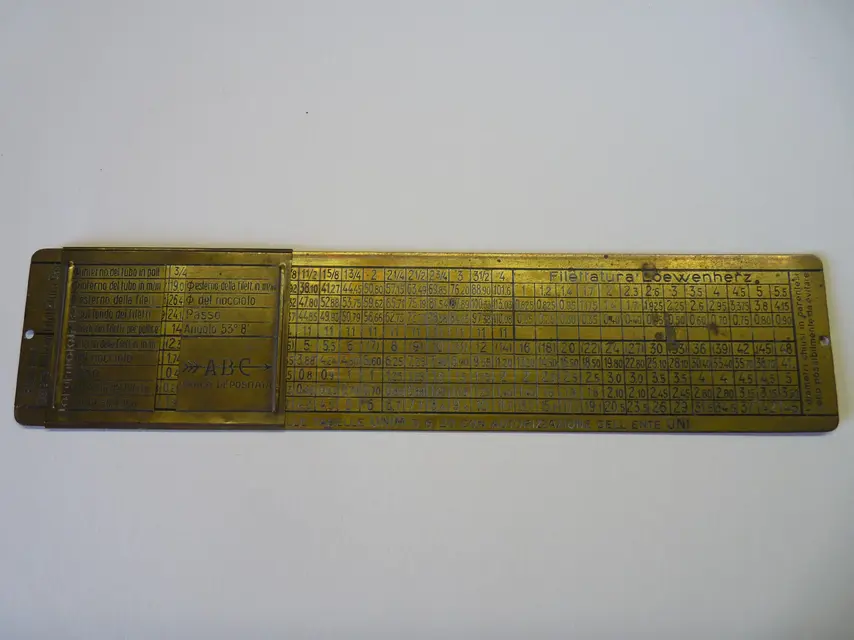
mine contributed to the construction of the aroma.
of him in the office, this ruler on the threads.
 

Attachments

  • P1040787.webp
    P1040787.webp
    476.6 KB · Views: 14
the sled dogIf you are asked what was the biggest landing operation of World War II, you will safely answer “the landing in Normandy!”.

Wrong!

the most demanding landing was the operation “sledge joint”, more known as “husky operation”, the largest amphibious operation in history in which seven divisions will be landed simultaneously (in Normandy, one year later, only five), three British, three Americans and one Canadian.
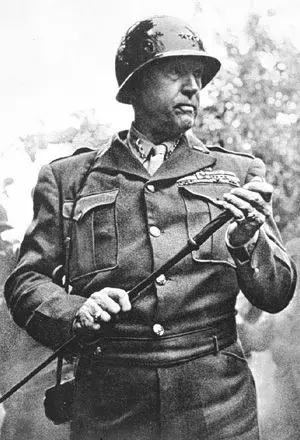
the husky operation constituted one of the greatest naval actions ever realized until then. the units engaged belonged to the 7th army used under the command of General George Paton and, the 8th British army under the command of General Bernard law montgomery, gathered in the 15th group of armies under the responsibility of General Harold alexander. It was also the first time that the allies made use of large-scale troops transported on planes and gliders. but this type of landing was a real disaster, both for the ground fire and for the poor preparation of the pilots for this kind of tasks. Sicily also marked the entry to Europe of the US Army in World War II.

Tunisia was now expected to attack southern Europe. among the various hypotheses, Corsican, Sardinian, the Balkans, the most logical to the Italians seemed Sicily. close to the African coasts and therefore to the allied air bases. in the German major state and, even more in adolf hitler, he instead took the belief that American and British troops would land in Sardinian and Greek. even the Luftflotte 2, commanded by the Field Marshal von richthofen had been moved from Sicily to Sardinia, precisely because of this incorrect strategic evaluation. and all this despite the repeated appeals of the Italian state to the German one to strengthen the Sicilian garrison.
the attack on Italy was decided by Americans and English during the Casablanca conference on 14 January 1943 (it was on this occasion that winston churchill called "Italian the soft belly of the axis"). for the Americans it was the logical continuation of the operations of algeria, Moroccan and Tunisia but for the British it was finally the attack on the Nazi fortress. planning and organization was entrusted to General dwight eisenhower. the invasion of Sicily also had another objective, to divert German troops from the eastern front in order to lighten the German pressure towards the Soviets that demanded with insistent opening of a second front.

before analyzing purely military operations, it is interesting to discuss the negotiation between the representatives of the Allied government and those in Sicily exercised the real power, namely the Mafia. He had to wait for 1976 before the anti-Mafia parliamentary committee declared: “sometimes before the Anglo-American landing in Sicily numerous elements of the American army were sent to the island, to take contacts with certain people and to arouse in the population feelings favorable to allies. once in fact that it had been decided at homeblanca the occupation of Sicily, the naval intelligence service organized a specific team (the target section), in charge of collecting the necessary information for the purpose of the landing and the "psychological preparation" of Sicily.

In this way a dense information network was set up, consisting of an increasing number of employees and informants. but the fact of greatest importance was the role played by the famous Polish lucky who, sentenced to 15 years by American justice, agreed to cooperate by contacting the American Mafia leaders who prepared the "terrene" to the Allied troops.
for the great services rendered, Luciano was pardoned in 1946, thus being able to return to Italy and resume the lucrose activities in the field of smuggling and drugs.
the office of strategic services directed by the general w. donvan, organized thanks to the mediation of the Italian agent max corvo, the negotiation with the mafia forming a unit that was nicknamed “the mafia circle”. in America the referents were besides luciano, vito genovese and albert anastasia, while in Italy the same luciano indicated michele sindona and a certain licio gelli.
the circle of the mafia and its chief max corvo, were landed in the north of Africa in May 43 and then be transported to falconara near gela while the agents of the oss freed from the prisons of favignana approximately 850 men of honor that after the occupation, will be appointed to public charges (62 of them will become mayors).

the husky operation began with a massive air bombing on the smaller islands then, on June 11 the allies landed at pantelleria, the 12 at lampedusa, the 13 at linosa and the 14 at lampione. the fall of pantelleria was considered as less hectic as on the island there were 11,000 soldiers and 180 cannons that had not suffered damage from bombs released by planes since the shelters had been dug into the rock. but the pavesi admiral, commander of the garrison, asked Mussolini the permission to surrender just on the horizon appeared allied ships making believe that they had exhausted the supplies of drinking water and food. for this he was sentenced to death in 44 by the government of the republic of salò.
the conquest of the island had cost the Anglo-American only two light wounded.

now you could think of the invasion of Sicily. eisenhower and montgomery agreed to choose the areas to land. seven divisions would have to land on a line of 160 kilometers along the south west coast of the island while two airborne divisions would have jumped behind the enemy. the landing would be carried out by the 8th army of montgomery and the 7th division of ramen. the English would have landed between pachino and siracusa to conquer augusta, catania and gerbini airfields and then point towards messina, while the Americans in the gulf of frost and then head towards comiso and licata conquering the central and western areas. the hour x was fixed for 2,45 of 10 July 1943 anticipated by the launch of parachutes.
While the Italians of the general alfredo guzzoni expected the landing where it would actually happen, the Germans of kesserling felt more likely the zones between drills and marsala. in defense of the Sicily were the 6th Italian army with the divisions aosta, assietta, livorno and napoli, the divisions coastal 202^,206^, 207^, 208^ and 213^, the xviii and the xix brigata and the 14^ panzer korps divided into the 15th panzer division and the panzer division hermann goering with a total of which the aerial forces included 15 hunting squadrons, 2 of reconnaissance, 4 of marine reconnaissance and 1 of aircraft.
Overall the forces in the field were of similar consistency. the 6th Italian army counted on 220.000 men of which however 50,000 non-combatants, with the usual problems of deficiencies of armament and motorization except perhaps a battalion of artillery of the livorno, equipped with semovents 90/53 able to counter any allied armor. The Germans, with 30,000 men under the command of General Frido von senger und etterlin, were sufficiently equipped.

on the night of 9 July, while the paratroopers were thrown behind the Italian-German lines, the allied fleet was spotted by aerial reconnaissance and immediately attacked. because of the bad weather conditions, on 144 gliders, 69 ended up at sea while many paràs were dispersed also, 24 other planes were shot down by the contraerea of the allied ships that had exchanged them for bombers of the axis. at dawn the first marines landed on the Sicilian beaches strongly counterattacked by the axis troops.
supermarine who did not want to risk the fleet to defend the island, turned to the chief of state who did not make any decisions like this, there was no operational action.
On the other hand, without adequate aerial coverage, for battleships and cruisers it would be a suicide mission, also having to face the British with 4 battleships (inson, rodney, warspite and the vessel just returned to service after the Italian assault vehicle) plus two other reserve (howe and king george v); two carriers (formidable and indomitable); cruisers orion, newfoundland, mauritius, uganda, aurora, penilelope, euryalus, cleopatra, sirius, dehly and dido; 35 destroyers; 4 cannons; 5 floating batteries and 6 launchers. Americans deployed five cruisers (boise, savannah, philadelphia, brooklyn and birmingham) and 25 fighters.
the marine direction lost during the operations the submarines ascianghi, bronze, flutto, black, silver and steel with the death of 152 men and obtaining in return, the damage of the cruisers cleopatra and newfoundland besides the sinking of the cannon mgb64.. .
 
After a preparatory naval bombing and a series of air strikes, the 7th army of PACn landed with three divisions in the tract between licata and gela colliding with the coastal defense of divisions 206^, 207^ and with the 18th brigade. in 24 hours the Americans landed 160,000 men. the following day hermann goering and working it, they counterattacked putting in serious difficulty allied positions and all the plan of invasion. the rescue came from the cannons of allied ships led by aerial reconnaissance, which hammered the forces of the axis. that despite the Italians defended themselves blindly. a twenty renault r-35 tanks of war prey of the 131th carriage regiment crossed almost all the American bridge head alone; the ccccxxix coastal battalion, badly armed, untrained and even deprived of the basic equipment (for example, not all had shoes, which passed to those who had to do the guard shifts) was so energetic to be able to arrest the Americans.
Meanwhile the British also encountered great difficulties in their advance towards catania.

but on 17 August, after 38 days from the landing, the allies entered to Mexican while the Germans, thanks to a bridge of boats, transferred about 40,000 German soldiers and 62,000 Italians, along with about 10,000 motor vehicles, 60 tanks, 150 guns and a large amount of fuel in calabria.
this will lead to the destitution of benign mussolini and the subsequent surrender of Italy.

However, it was a bitter victory for the Anglo-Americans both because the losses were ingenious and avoidable, many were caused by the fall of the parachute at sea, and because they were unable to prevent the retreat in the German army.
and this happened because of the lack of coordination between the British and the Americans as a result of the rivalry between montgomery and ramen. the last one who did not tolerate being relegated to a secondary role and who had suffered significant losses to frost contrary to the almost walk in the Syracusan of the English, he enraged and to repeal as soon as he knew that montgomery had found a fierce resistance on the simeto, he exclaimed that the time had come for the English to "conquer the honor in the field with their other
Moreover, we have always talked about mass defections of our troops while in reality many departments fought bravely. the Italian units were for precise choice, consisting mainly of Sicilian soldiers who considered themselves more motivated in the defense of the island even if penalized by the rather high average age and by the fact that many of them had the family subjected to continuous allied bombings.

We know that the indiscriminate use of bombers on cities was one of the major cruelties accomplished during World War II. this use of the aerial weapon had been decided in the meeting of houseblanca between roosevelt and churchill in which it had been decided, among other things, "an air campaign with an offensive of bombing as intense as possible. . whose aim was above all to cut apart, beyond the war factories, the morality of the civilian population." and so it was.

the days before the landing were terrible for the Sicilians, continually affected by everything flying with bombs that devastated squares, monuments, houses, countries, with the aim of generating discontent among the soldiers who were now fighting exclusively for their defense. all the provincial leaders were razed to the ground causing thousands of deaths.
the operation "sleepholes" had caused the Allied forces 22,000 dead, injured and, dispersed over 20,000 malaria patients. German losses were 10,000 men while the Italians suffered 5,000 deaths and 116,000 prisoners sign of the dissolving of the army. the Sicilian campaign began political events that will change the Italian situation. on 25 July fascism falls and mussolini is arrested. on 3 September we arrive at the signing of the armistice made public on 8, which will determine the German occupation, the liberation of the duce, prisoner to the great rock, by the Germans and its temporary translation into germany.
 

Attachments

  • 1442.webp
    1442.webp
    32.3 KB · Views: 4
  • Montgomery.webp
    Montgomery.webp
    11.4 KB · Views: 2
congratulations always clear and exhausting......... :finger:

I have to say that while knowing the Mafia/U.s. army intrallazzi I was not aware of the name of max corvo.
and still being aware of the name of ice creams and of the fact that thanks to some "favours" made also to the partisans if it burst + that well, I was not aware of its involvement in the landing in Sicily.
Where did you get these two news?
Is it possible to know the source?
Hi.
 
Is it possible to know the source?
Hi.
On the other hand, you said you could tell me your source, but then you should kill me.
we could then arrange an exchange.:rolleyes:

Other jokes:
"the 2nd World War" of petac arrigo
"the 2nd World War" of winston churchill
The 2nd World War by John Keegan
"war in the peaceful" of bernard milliot
one of my favorites, I will have read it xxxx times " twenty-five centuries of war on the sea" by jaques mordal.
a series in continuous expansion (research on stalls, shops, sites) of books on different aspects of the same subject with a remarkable prevalence of texts on submarines (a 60ine of historical texts plus technical ones).
almost all numbers of the "Maritime Magazine" from 1980 onwards (some even before).
almost all numbers of "military history" since the late 1990s.
numerous "archive bulletins" of m.m.
I hope many articles of the commander alessandro turrini (for me the maximum Italian expert of submarines)
I hope so much of what is written by wet hermitage (another great).
several red numbers
access to the administration library.
the possibility to consult the archive of the ship museum.
and of course the internet with I do not currently know how many links to relevant sites.
and I give a little knowledge of the English language. . .

Once I have identified a topic that I like to deepen, the search begins. then it is a question of copying, reworking, pasting and finally, "personalizing" with considerations, comments, opinions, reflections.

I add an anticipation.
from a friend of the forum, I recently received material belonging to his family. a very passionate article came out of it and that struck me.
He gave me the opportunity to deepen some aspects of the recent history that I had never "explored" as they deserved.
short (I think in early September), with the permission of our dear friend, I will publish on cad3d the result of historical analysis.
I want to do something I've never done before, that's a little publicity.
I invite you to read the article from now on.
for me it was "emotional" and I hope to be able to convey the same emotions to you who, generously, read me.
Thank you.
 
Last edited:
On the other hand, you said you could tell me your source, but then you should kill me.
we could then arrange an exchange.:rolleyes:
:redface: Well, now we're not joking, I don't want to find myself with a torpedo that chases me. :smile:
 
Other jokes:
"the 2nd World War" of petac arrigo
"the 2nd World War" of winston churchill
The 2nd World War by John Keegan
"war in the peaceful" of bernard milliot
one of my favorites, I will have read it xxxx times " twenty-five centuries of war on the sea" by jaques mordal.
a series in continuous expansion (research on stalls, shops, sites) of books on different aspects of the same subject with a remarkable prevalence of texts on submarines (a 60ine of historical texts plus technical ones).
almost all numbers of the "Maritime Magazine" from 1980 onwards (some even before).
almost all numbers of "military history" since the late 1990s.
numerous "archive bulletins" of m.m.
I hope many articles of the commander alessandro turrini (for me the maximum Italian expert of submarines)
I hope so much of what is written by wet hermitage (another great).
several red numbers
access to the administration library.
the possibility to consult the archive of the ship museum.
and of course the internet with I do not currently know how many links to relevant sites.
and I give a little knowledge of the English language. . .

Once I have identified a topic that I like to deepen, the search begins. then it is a question of copying, reworking, pasting and finally, "personalizing" with considerations, comments, opinions, reflections.

I add an anticipation.
from a friend of the forum, I recently received material belonging to his family. a very passionate article came out of it and that struck me.
He gave me the opportunity to deepen some aspects of the recent history that I had never "explored" as they deserved.
short (I think in early September), with the permission of our dear friend, I will publish on cad3d the result of historical analysis.
I want to do something I've never done before, that's a little publicity.
I invite you to read the article from now on.
for me it was "emotional" and I hope to be able to convey the same emotions to you who, generously, read me.
Thank you.
What to say... in front of cotanta tenacia, patience and passion:confused:

some of the publications that you mentioned I know and some have read them, I have some books on the campaign of russia, some footage found on the net, and some old numbers of the magazine "historia" of the '80s" also try to keep me informed to squeaks and spazzichi on the internet.

but nothing + of this....... also because history is only one of my interests, I practically care about everything.
Besides, you are focused on the history of World War II, while I am interested in the whole story.
I am ready to read what you will publish in September.
Hi.
 
...you are also focused on the history of World War II, while I am interested in the whole story.
I am ready to read what you will publish in September.
Hi.
I really like the period of ancient roma, from the origins at least until the split of the empire with Constantinople.
But then I get hung up on the whole story.
For example, all the time I go to the cairo and to giza or in the rest of the classic egypt, I remain fascinated by the ancient Egyptians (one thing is to read the books, another is to touch with hand the grandeur of some works. And that's where you ask questions... ).
but the same thing happens to me when I go to roma and pass for the imperial holes, or if I go to the mountain grappa.. .
I mean, maybe I did wrong.:biggrin:
the ii gm is however a period that fascinates me because close to us temporally, but so "slow" seeing how little is teaching to the new generations.
we, I, have not/have lived the war and its direct consequences. but just go back to our grandparents to hear unimaginable stories for the current society.
disappeared ideals, trampled, denied.
poor Italian and poor our grandparents... for what you sacrificed your life!
 
I really like the period of ancient roma, from the origins at least until the split of the empire with Constantinople.
But then I get hung up on the whole story.
For example, all the time I go to the cairo and to giza or in the rest of the classic egypt, I remain fascinated by the ancient Egyptians (one thing is to read the books, another is to touch with hand the grandeur of some works. And that's where you ask questions... ).
but the same thing happens to me when I go to roma and pass for the imperial holes, or if I go to the mountain grappa.. .
Actually... :finger: perhaps the aliens were:
I have not had a great foreign vision of certain monuments, but even if seen only through TV they leave breathless.
insomma, consider ho sbagliato masters.:biggrin:
then we are in 2
the ii gm is however a period that fascinates me because close to us temporally, but so "slow" seeing how little is teaching to the new generations.
we, I, have not/have lived the war and its direct consequences. but just go back to our grandparents to hear unimaginable stories for the current society.
disappeared ideals, trampled, denied.
poor Italian and poor our grandparents... for what you sacrificed your life!
What to say... I think it exactly like you, so far so close to certain situations of ii gm.

Hi.
 
Actually... :finger: perhaps the aliens were:
I have not had a great foreign vision of certain monuments, but even if seen only through TV they leave breathless.
absolutely. . .
You want to listen to Jacob on TV...
the thing for example that most struck me, is a statue of kafra (or kefren), the builder of one of the pyramids of giza, in black diorite, which is exposed to the museum of the cairo and was found buried under the floor of the temple of the sphinx.
It's so smooth, smooth, it looks like porcelain.
the question is: if the diorite was the most "hard" material they knew at the time, so much to be used to sculpt the granite... What did they do with?

What to say... I think it exactly like you, so far so close to certain situations of ii gm.
Hi.
sometimes the estermas are closer than it might seem...:wink:
Bye.
 

Attachments

  • cairo1.webp
    cairo1.webp
    26.2 KB · Views: 10
amateurthe first years of Fascist Italy did not see racist measures on the contrary, among the fascists of the first hour there were many Italians of Jewish religion so much that hundreds of them participated in the march on Rome.
In contrast to hitler, who had already risen to power in '33 issued the first discriminatory measures, mussolini initially declared himself contrary to forms of anti-Jewish racism.
to understand the change of fascism towards Jews, a new character must be introduced on the scene.

in 1912 benign mussolini still militates in the socialist party.
to him, maxilist and barricadiero, the twenty-year-old roberto farinacci, reformist and cautious.
curiously in the next thirty years will exchange the roles becoming mussolini a master mediator of compromise, flourishing instead, arrogant and untransigent.
in 1935 roberto farinacci is part of the “disperate”, a squadron of aviators that includes cyan, mute, and the sons of mussolini victorious and brown and that will work during the war of Ethiopia. back in Italy, flourishes becomes “the man of the Germans” and begins to share and admire the enterprises. in 1937 he went to spanish to participate in the Franco war and assists the fascist defeat of guadalajara remaining scandalized by the unpreparing of Italian troops.
It is in this period that flourishes turns out racist and is “in love” of hitler and nazism.
This leads him to approach precious young people who since 1920 from the pages of "the Italian life", attacks the "Jewish world conspiracy".
anti-Semitism becomes a demonstration of its total adherence to Nazism that leads him to consider the Germans the “only men of honor”. flourishes is transformed into the leader of the Italian anti-Semitic campaign in which 40,000 Italian Jews will be the contribution to Italian-German friendship.

There is no room for racism in the Italian afterlife, but for flourishes it represents a sign of fidelity to the Nazi ally. In this way, also fed by men of culture, anti-Semitism spreads and flourishes with trieste, a city with a strong Jewish presence. if he takes it in particular with rino alessi, director of the “little” of Trieste, a fascist Jew former schoolmate of the duce, forcing the owner of the newspaper, the Jewish theodor mayer, to yield its rights.
"German" flours, the hatred of balbo, of great, of care and of the king is drawn. according to some testimonies flourishes would make profits by making to pay to weight of gold favors rendered to the Jews (it will be accused of having possessed 300 million liras of the time in addition to villas, apartments and land).

on 14 July 1938 the “manifest of race” was published on the major national newspapers.
in the manifesto, written by five professors (arturo donaggio, franco savorgnan, edoardo zavattari, nicola pende and Saturday visco) and by five university assistants, is fixed the "position of fascism towards the problems of race".
among the adhesions to the poster are those of illustrious characters such as, for example, giorgio almirante, piero bargellini, giorgio mouth, galeazzo ciano, amintore fanfani, agostino twins, john Gentile, luigi gedda, giovannino guareschi, mario missiroli, romolo murri, giovanni papini, ardengo soffici, giuseppe tucci.
the ten dictates were:
- human races exist
- there are large breeds and small breeds
- the concept of race is a purely biological concept
- the present Italian population is in the Aryan majority and its civilization is Aryan
- is a legend the contribution of large masses of men in historical times
- there is now a pure Italian race
- it is time for Italians to proclaim themselves frankly racist
- it is necessary to make a clear distinction between the Mediterranean of Europe (Western) on the one hand and the Orientals and Africans on the other
- Jews do not belong to the Italian race
- the purely European physical and psychological characters of Italians must not be altered in any way

This manifesto leads to the promulgation of racial laws. the Chamber approves it on 14 December 1937: of the 400 Members in office, there are 351 votes in favour unanimously (the presence of four Jewish Members was reported: guide jung, gino arias, rich lusters and jacopo olivetti). the senate approved them on 20 December (only 164 senators out of 400, of which only 10 were the votes against).

when on 25 July 1943 the meeting of the great council is held, the Germans see in flourish the only man of honor who can return Italy to fascism and joins with the former enemies of yesterday; great, philanthropists, bottai. his purpose is to remove power to mussolini but not to pass it to the king, but to the Germans. then raises and pronounces the most important speech of his career in which he praises the glory and faithfulness of the black shirts that he has forgotten, rebukes the duce of not trusting him and other “old” then rejects the offer of cyan to unify the orders of the day. the big one is approved with 19 votes in favor, that of flourishes is snobbed and is not even voted.
for this reason the Germans judge him an inept and mussolini inserts him among the 200 traitors to be shot and then recalls him to himself in the illusion of creating a triumvirate.
Mussolini the 25 is arrested and the Germans send flourishes Germania with goebbels who consider it “a babbeo” while hitler ignores it completely.
in the republic of salò hopes to be appointed minister of the inside or secretary of the party. He does not get in one another. on 27 April 1945 he attempted to flee to the reduced Valtellina but was arrested by the partisans. on 28 morning, in the rain, flour is processed by the partisans of the adda brigade. the persecution of the Jews, the murder of matteotti, the veneration for hitler.
is sentenced to the fucilation of the back, they force him to the wall but he turns.
someone slaps him and turns him to the wall but at the time of the shoot, flour turns and shouts “live Italy”.

dies almost at the same time as his “most dearest friend” mussolini.
 
Last edited:
among other things to the manifesto of the race adhered almost to the totality of the Italian academic body, yet mussolini also had a Jewish lover; Margherita sarfatti.

as well, and this know in a few, the secretariat of flourishes was Jewish.
This caused him a lot of trouble in the tissue struggles of the beam, he kept so much that he saved her several times.
and it doesn't seem like they were lovers... I don't remember his name or how it ended.

great post as always, with some small inaccuracies that I reserve to show you.
Hi.
 
among other things to the manifesto of the race adhered almost to the totality of the Italian academic body, yet mussolini also had a Jewish lover; Margherita sarfatti.

as well, and this know in a few, the secretariat of flourishes was Jewish.
This caused him a lot of trouble in the tissue struggles of the beam, he kept so much that he saved her several times.
and it doesn't seem like they were lovers... I don't remember his name or how it ended.

great post as always, with some small inaccuracies that I reserve to show you.
Hi.
It's true, even the secretariat of flourishes was Jewish and was called jole foà. Farnacci also opposed the duce that "suggested" him to liquidate it with 50,000 liras.
look to read the notes.:finger:
Bye.
 
in the meantime I found the following:
jole foa, daughter of sansone foa and dina tenseura. She was born in Italy, in vercelli, on November 16 1890
arrested in the province of como.
deported into the extermination camp of auschwitz.
He didn't survive the shoah.

But I don't know if it's the secretariat of flour or a homonimia.
 

Forum statistics

Threads
44,997
Messages
339,767
Members
4
Latest member
ibt

Members online

No members online now.
Back
Top
